
All posts
best GPS dog fence under 350 dollars
No Subscription GPS Collar Under $350 That Actually Works for Open Yards

For most budget-conscious owners with an open or lightly wooded yard, the HAVEN Freedom Wireless GPS Dog Fence and Tracking Collar is the strongest pick under $350, mainly because its containment works without a required subscription.
TL;DR:
- The HAVEN Freedom collar provides reliable containment without a subscription for open or lightly wooded yards, but GPS drift can affect accuracy in dense tree cover.
- Battery life for budget collars typically ranges from one to three days, and careful boundary setup and seasonal adjustments improve reliability.
- The recovery system’s combination of sound, light, and Bluetooth signals offers multiple ways to locate a dog outside the boundary, especially useful during GPS drift issues.
- Physical barriers or hybrid setups are better suited for heavily wooded or small urban yards, where GPS accuracy is compromised and fixed boundaries are more dependable.
- Proper boundary training, consistent cues, and layered containment strategies significantly enhance a GPS collar’s effectiveness in preventing escapes.
Table of Contents
- Is There a Best GPS Dog Fence Under $350?
- Why HAVEN Freedom Fits Budget Buyers
- What to Check Before You Buy a Budget GPS Collar
- GPS Collars vs. Wired Fences vs. Playpens: Which Fits Your Yard?
- How to Train Your Dog to Respect a GPS Boundary
- What a Budget GPS Fence Really Costs Over Time
- HAVEN Freedom’s Features, Mapped to the Buyer Checklist
- Customer Support and Warranty Policies to Expect
- Safety Features and Fail-Safes Worth Checking
- How Setup and Installation Actually Work
- Where to Buy HAVEN Freedom and What to Expect at Checkout
- When a Budget GPS Collar Is the Right Call (And When It Isn’t)
- Sources
- FAQ
Is There a Best GPS Dog Fence Under $350?
Yes, if you set expectations correctly first. A budget-focused breakdown of fences under $350 found that true no-subscription GPS containment collars typically land at a price point that many budget-conscious buyers can consider, leaving room in the budget for accessories or a short training course. That math changes everything about how you shop.
Most “best GPS dog fence” roundups compare specs in isolation, accuracy here, battery life there, without weighing them against what a $350 ceiling actually buys you. What separates a genuinely good cheaper option from a disappointing one is whether the containment function requires a monthly fee to keep working, and whether the company is upfront about GPS drift limitations rather than burying them in fine print.
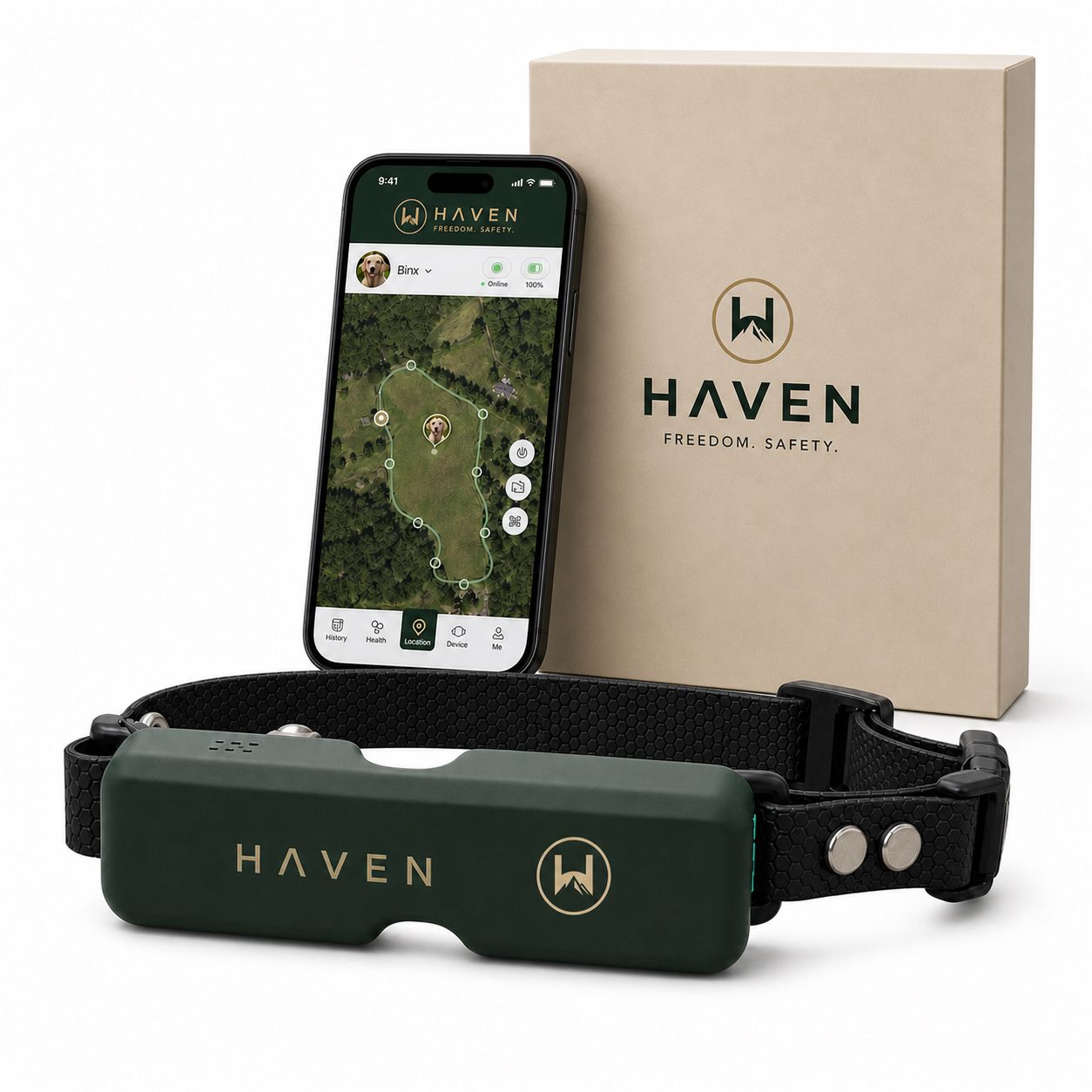
HAVEN Freedom fits both a premium and budget-buyer profile because its wireless boundary doesn’t depend on buried wire and the core fence function runs without a subscription. A paid plan only unlocks extras: live 4G tracking and escape alerts. That’s a meaningfully different cost structure than collars that lock basic containment behind a recurring fee.
Why HAVEN Freedom Fits Budget Buyers
The First Year of Connectivity Is Included, a $60 Value per Collar
Most coverage of GPS collars collapses two different things into one word: "subscription."
The fence on HAVEN Freedom never needs a plan. Boundaries are stored on the collar itself, so containment keeps working with no subscription, no cellular signal and no base station.
The connected features are a separate layer — live 4G tracking, escape alerts pushed to your phone, remote access and location history. Those need a plan, because they need a SIM and a server behind them.
Every HAVEN Freedom collar includes twelve months of that connected layer, free. Not a 30-day trial, and not a discount off the first month — a full year, on each collar you buy.
Why it's worth $60
Bought on its own, a single year of HAVEN connectivity costs $5 a month, or $60 for the year. Longer commitments cost less per month, $3.50 on a three-year plan, $2.50 on five year, but those are commitments. The only way to buy exactly one year is at $5 a month, which is why the first year is worth $60 and not less.
It scales per collar, not per household: two collars means two included years, or $120 of connectivity.
What that does to the five-year maths
| Haven Freedom | A collar with a required $15/month plan | |
| Collar | $247.99 | $250 |
| Year 1 Connectivity | Included | $180 |
| Year 2-5 | $150 on a five-year plan, or $0 if you only want the fence | $720 |
| 5 Year Total | $247.99 to ~$398 | $1050 |
The collar makes sense for owners who want reliable containment without monthly fees to keep the fence active, with optional tracking available.
Three things set it apart from other options crowding this price bracket:
- Subscription structure. The wireless boundary itself works with no ongoing fee; you only pay if you want live tracking, escape alerts, or other app features layered on top.
- Recovery tools. If your dog does slip the boundary, the built-in dog finder combines sound, light, and Bluetooth, three separate ways to locate a wandering pet instead of relying on GPS alone.
- Training flexibility. Adjustable tone, vibration, and optional static correction let you match the collar’s feedback to your dog’s temperament instead of using one blunt setting for every breed.
Roundups that specifically cover sub-$350 fences tend to recommend mixing GPS with low-tech options depending on lot size, which tells you something: no single product wins for every property. If your yard sits under heavy tree cover, or your dog is a determined escape artist with high prey drive, a GPS collar alone (from any brand) is the wrong tool, no matter how good the marketing sounds.
Red flag for mismatch: if you’re shopping for a tiny, fully shaded urban lot, skip GPS entirely and look at physical barriers instead. You’ll read why in the comparison section below.
What to Check Before You Buy a Cheaper GPS Collar
Shopping under $500 means every spec has to earn its place. Skipping this checklist is how owners end up with a collar that beeps constantly in the wrong spots or corrects a dog who never left the yard.
- GPS accuracy under real conditions. Reviewers testing systems across brands report premium units holding accuracy within about 2 to 5 feet, while budget collars can drift significantly, especially under tree cover once tree cover or nearby structures interfere with the signal. Ask any brand directly what their accuracy claim assumes, open sky or average conditions, before buying.
- Battery life you can actually plan around. GPS collars run one to three days per charge under normal use, less if the tracking feature is active constantly. Build a charging routine into your evening habits instead of waiting for a dead-battery surprise mid walk.
- Subscription math over five years. A collar with a required $10 to $20 monthly plan can cost hundreds more over several years than a no-subscription containment model, even if the upfront price looks similar.
- Dog fit. Check the manufacturer’s minimum weight and neck-size range. A collar built for a Labrador will sit loose and unreliable on a 12-pound terrier.
- Property suitability. GPS containment needs a reasonably open view of the sky. If more than a third of your yard sits under dense canopy, expect inconsistent corrections.
- Durability and waterproofing. Look for an IP rating or explicit water-resistance claim; dogs don’t check the weather before running through a sprinkler or a puddle.
Pro Tip: Before you commit to any collar, walk your actual property boundary at the time of day your dog is usually outside. Shade patterns shift, and a yard that looks open at noon can lose GPS visibility by late afternoon.
GPS Collars vs. Wired Fences vs. Playpens: Which Fits Your Yard?
The mistake most first-time buyers make is assuming “GPS” automatically means “best.” It doesn’t. Each containment method solves a different problem, and picking based on price alone often means picking wrong.
GPS collars buy you portability and shape flexibility. You can draw an irregular boundary around a garden, carve out a pool area, or take the same collar on a road trip and set a new boundary at a rental house in minutes. That flexibility comes at a cost: performance depends entirely on satellite visibility, which means dense trees, tall buildings, or steep terrain can all degrade accuracy.
Wired, in-ground fences work the opposite way. Burying a wire loop around your property gives you a fixed, highly consistent boundary that doesn’t care about tree cover or GPS drift. The tradeoff is labor and cost. Digging trenches yourself takes a weekend of real work, and professional installation frequently pushes past $350 before you’ve bought a single collar.
Playpens and exercise panels solve a narrower problem well: small, temporary, or supervised containment. They cost little, need zero technology, and set up in minutes. They’re a poor fit for anyone who wants their dog to roam a full acre yard unsupervised, but they’re excellent for a puppy who isn’t boundary-trained yet or a dog recovering from surgery.
Here’s how that breaks down by situation:
- Open, one-plus acre lot with light tree cover: GPS collar is the practical choice; wired fencing costs too much for the area covered.
- Small suburban yard, mostly open sky: GPS collar works, but a wired fence may pay for itself if you’re staying in the home long term.
- Heavily wooded lot or dense urban yard: skip GPS-only containment; a wired fence or a hybrid setup with physical barriers will outperform it.
- Renters or frequent travelers: GPS wins outright since it moves with you and requires no installation at a new address.
- Puppies or dogs still learning boundaries: start with a playpen or panel system, then graduate to GPS once basic obedience is solid.
Owners managing larger or mixed-use properties, a fenced garden plus open pasture, for example, often do best combining approaches rather than picking one exclusively. A hybrid containment strategy built around GPS for the open sections and a physical barrier for a garden or pool area tends to outperform any single method used alone.
How to Train Your Dog to Respect a GPS Boundary
Buying the right collar solves maybe half the problem. The other half is training, and it’s the half most owners rush or skip entirely.
The American Kennel Club’s guidance on GPS fences is blunt on this point: consistency matters more than any feature list. A dog that gets a warning tone sometimes and not other times, or gets corrected at inconsistent boundary points, ends up confused rather than trained. Predictable cues, applied the same way every single time, are what actually teaches a dog where the line is.
Here’s a realistic training timeline that works with most budget collars:
- Days 1 to 3: Walk the boundary line with your dog on a leash, letting them hear the warning tone at the edge without a correction. Reward retreat toward the yard’s center immediately.
- Days 4 to 7: Repeat the same walks off leash but supervised, allowing the warning tone (and correction, if your collar has one) to do its job while you stay nearby to reinforce with praise.
- Week 2: Reduce supervision gradually. Watch for hesitation at the boundary rather than confident stopping. Hesitation means more repetition is needed before leaving the dog unsupervised.
- Ongoing: Re-walk the boundary any time you adjust it in the app, and after any extended absence (a week away, a change of season with different foliage).
This mirrors the approach in a 14-day wireless boundary training plan, which breaks the same process into checkpoints so you know if training is on track or needs more repetition.
Two real-world factors undermine even a well-trained dog. High prey drive is the big one: a dog locked onto a squirrel or a deer will often run through a warning tone and correction without hesitation, because the chase drive briefly overrides the training. Deep canopy is the second: if GPS accuracy is drifting 20 feet in one section of your yard, the boundary itself becomes unpredictable, and unpredictable boundaries erode training fast.
Mitigate both with layered strategies. Keep a chase-prone dog supervised during peak wildlife hours (dawn and dusk). Add a short run of physical fencing or garden edging along the section of yard with the worst tree cover instead of relying on GPS there. And use your collar’s return-to-home audio cue, if it has one, since guiding a confused dog back rather than repeatedly correcting them reduces the frustration that leads to boundary avoidance altogether.
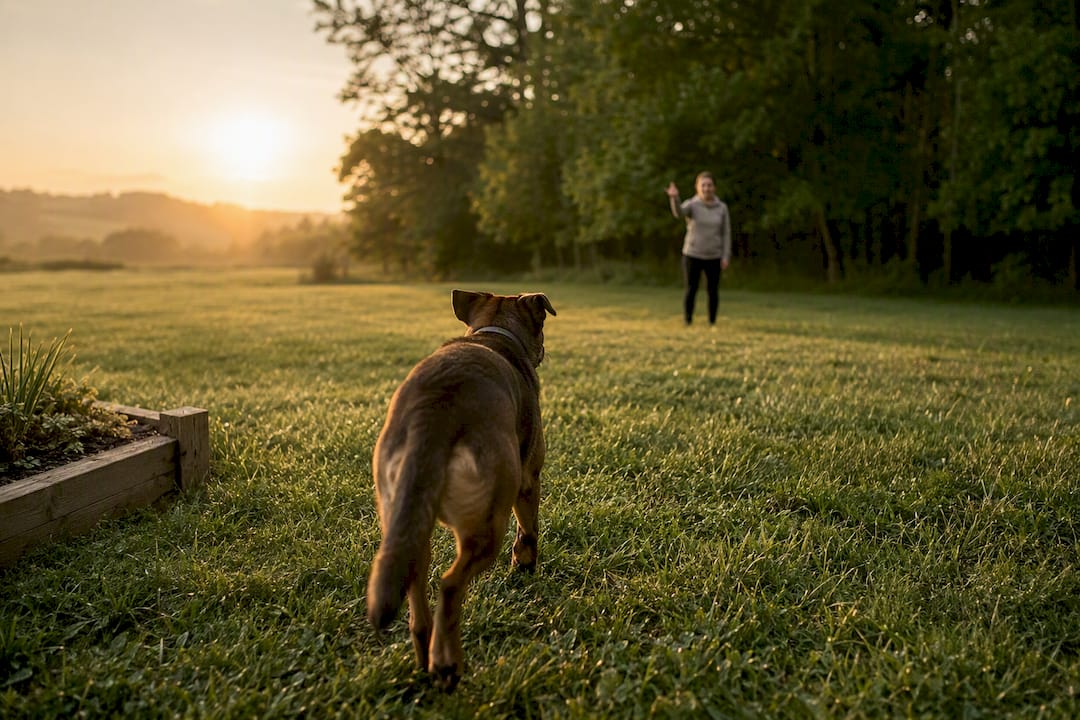
Pro Tip: Practice a “recall to boundary” cue during calm moments before you ever need it during an actual escape attempt. A dog who already associates a specific whistle or word with coming back to you will respond faster in a real chase scenario than one hearing it for the first time under stress.
What a Budget GPS Fence Really Costs Over Time
The sticker price is only part of the story. What separates a genuinely affordable GPS dog fence from a false economy is what happens after year one.
Subscription-based systems often look cheaper at checkout, sometimes $100 less than a no-subscription collar, but that gap reverses fast. A monthly plan running $8 to $20 adds up to $480 to $1,200 over five years just to keep containment running. No-subscription models like HAVEN Freedom flip that structure: the fence works without an ongoing fee, and you only pay monthly if you specifically want live tracking or escape alerts layered on top.
Five-year cost snapshot: A $250 collar with a mandatory $15/month plan costs roughly $1,150 over five years. A $250 collar with no required subscription costs $250, plus whatever optional tracking you choose to add.
Budget for a few recurring items regardless of which system you buy:
- Collar strap or housing wear. Outdoor use means UV exposure and chewing risk; expect to replace the physical strap once every year or two.
- Warranty terms. Check the manufacturer’s return window and what’s covered (defects, water damage, battery failure) before you’re outside the return period.
Setup mistakes cause more false corrections than hardware flaws do. A proper GPS fence setup done right the first time usually takes under two hours and dramatically cuts down on drift-related errors. The two habits that matter most: draw your boundary a few feet inside your actual property line (never right up against it), and avoid finalizing the boundary shape while standing under the densest part of your tree canopy, since that’s exactly where the GPS signal is least reliable.
HAVEN Freedom’s Features, Mapped to the Buyer Checklist
Running HAVEN Freedom’s actual features against the checklist above shows where it earns its price and where buyers still need to manage expectations themselves.
The collar creates wireless boundaries without buried wire. You draw the boundary shape in an app and can adjust it as needed, avoiding digging or professional installation costs.
The subscription structure means the fence works without a monthly plan; a paid plan is only needed for features like live tracking or escape alerts and you get 12 months of that for free. This helps manage ongoing costs over time.
- Boundary technology: wireless, no buried wire, adjustable through the app.
- Recovery system: combines sound, light, and Bluetooth for locating an escaped dog, three independent signals instead of GPS alone.
- Training modes: adjustable tone, vibration, and optional static correction, so feedback intensity can match a nervous rescue dog or a stubborn working breed differently.
- Activity tracking: built-in activity and sleep monitoring runs alongside the containment function.
- Subscription structure: containment works standalone; a plan only unlocks live tracking and escape alerts.
The dog finder feature deserves particular attention because it addresses a gap most competitors leave open. GPS accuracy problems drift covered earlier, mean that even a well-trained dog can occasionally slip a boundary during a chase or a storm scare. Having three separate recovery signals (sound, light, Bluetooth) gives you more than one shot at finding a dog quickly rather than relying purely on a GPS pin that might itself be drifting.
None of this replaces the training work covered earlier. A collar with excellent recovery tools still performs best when paired with the walk-the-line training routine and consistent cues the AKC recommends. Features solve the technology half of containment; training solves the behavior half, and skipping either one weakens the whole system.
Customer Support and Warranty Policies to Expect
Before buying any GPS collar under $300, check three things: the return window, what the warranty actually covers, and how the company handles defective units versus user error.
Every order includes a one-to-one setup call
Not a ticket, not a chatbot — a scheduled call with a person, included with every collar at no extra cost.
Setup is where GPS containment usually goes wrong, and it goes wrong in ways that look like hardware faults. A boundary drawn right up against the property line instead of a few feet inside it. A perimeter walked at noon in a yard that loses satellite visibility by late afternoon. A first boundary set too large for a dog who hasn't been trained to it yet. All three produce the same symptom — inconsistent corrections — and all three are fixable in ten minutes with someone looking at the map with you.
On the call we'll teach you exactly how to set your collar up and explain how to use the collar and app features.
How to reach us
Phone: +1 (650) 789-6290
Email: enquiries@havenfreedom.com — we usually reply within a few hours.
Support hours: 8:00am to 8:00pm Eastern Time, seven days a week.
Twelve hours a day, every day, including weekends. Sales questions and troubleshooting go to the same place — there's no separate tier and no upgrade path to reach a person.
What we'd rather you did
Contact us before assuming the collar is faulty. Most of what gets reported as a hardware problem in the first fortnight is a boundary placement or training issue, and it's quicker for both of us to look at it together than to process a return that wasn't needed.
And if the product genuinely isn't right for your yard, tell us that too. A GPS collar under dense canopy is the wrong tool, and we'd rather take the return than have a dog relying on a boundary that can't hold.
Safety Features and Fail-Safes Worth Checking
A GPS fence is only as good as what happens when it fails, and every system fails occasionally. The features that matter most under $350 are the ones that catch a slip before it becomes a lost-dog situation.
Escape alerts, sent to your phone the moment a dog crosses the boundary, are the single most valuable fail-safe on a budget collar. Without one, you might not know your dog left the yard until you notice them missing, which can mean a head start of many minutes.
Look for these fail-safe features specifically when comparing collars:
- Real-time escape notifications pushed to your phone, not just a beep on the collar itself.
- Low-battery warnings sent before the collar dies, since a dead collar means no containment and no alert.
- Multi-signal recovery tools (sound, light, Bluetooth, or similar) rather than GPS location alone, since GPS drift is exactly the failure mode you’re trying to protect against.
- Adjustable correction intensity so the collar can be set gently for anxious or elderly dogs rather than one fixed strength for every animal.
None of these features prevent a determined dog from slipping a boundary during a genuine prey chase. What they do is shrink the window between “dog left the yard” and “owner knows about it,” which is usually the difference between a quick recovery and a stressful multi-hour search.
How Setup and Installation Actually Work
The appeal of GPS containment over wired fencing comes down to one thing: no digging. Setup for most budget GPS collars follows a similar pattern regardless of brand, though the details vary.
You start by downloading the manufacturer’s app and pairing it with the collar over Bluetooth. From there, you draw the shape directly on a satellite map view, adjusting corners until it matches your property. Most systems let you save multiple boundary profiles, useful if you want a smaller “training” boundary for the first week and a larger final boundary once your dog is reliable.
A full setup walkthrough covering the app-pairing and boundary-drawing steps can get most owners from unboxing to a working boundary in under 30 minutes for straightforward, mostly-open yards. Properties with more complex shapes, multiple zones, or heavy tree cover in sections take longer simply because you’ll want to test and adjust the boundary lines more carefully before trusting them unsupervised.
The most common setup mistake is finalizing a boundary in one weather condition and never revisiting it. Foliage that’s bare in winter fills in by summer, which can shift where GPS signal drops off. Plan to re-walk and adjust your boundary at least once per season if you live somewhere with real seasonal tree cover changes.
Where to Buy HAVEN Freedom and What to Expect at Checkout
If everything above matches your situation, open sky or light tree cover, a preference for skipping monthly fees, and a dog that’s ready for real boundary training, the HAVEN Freedom GPS dog fence and tracking collar is the practical pick under $350.
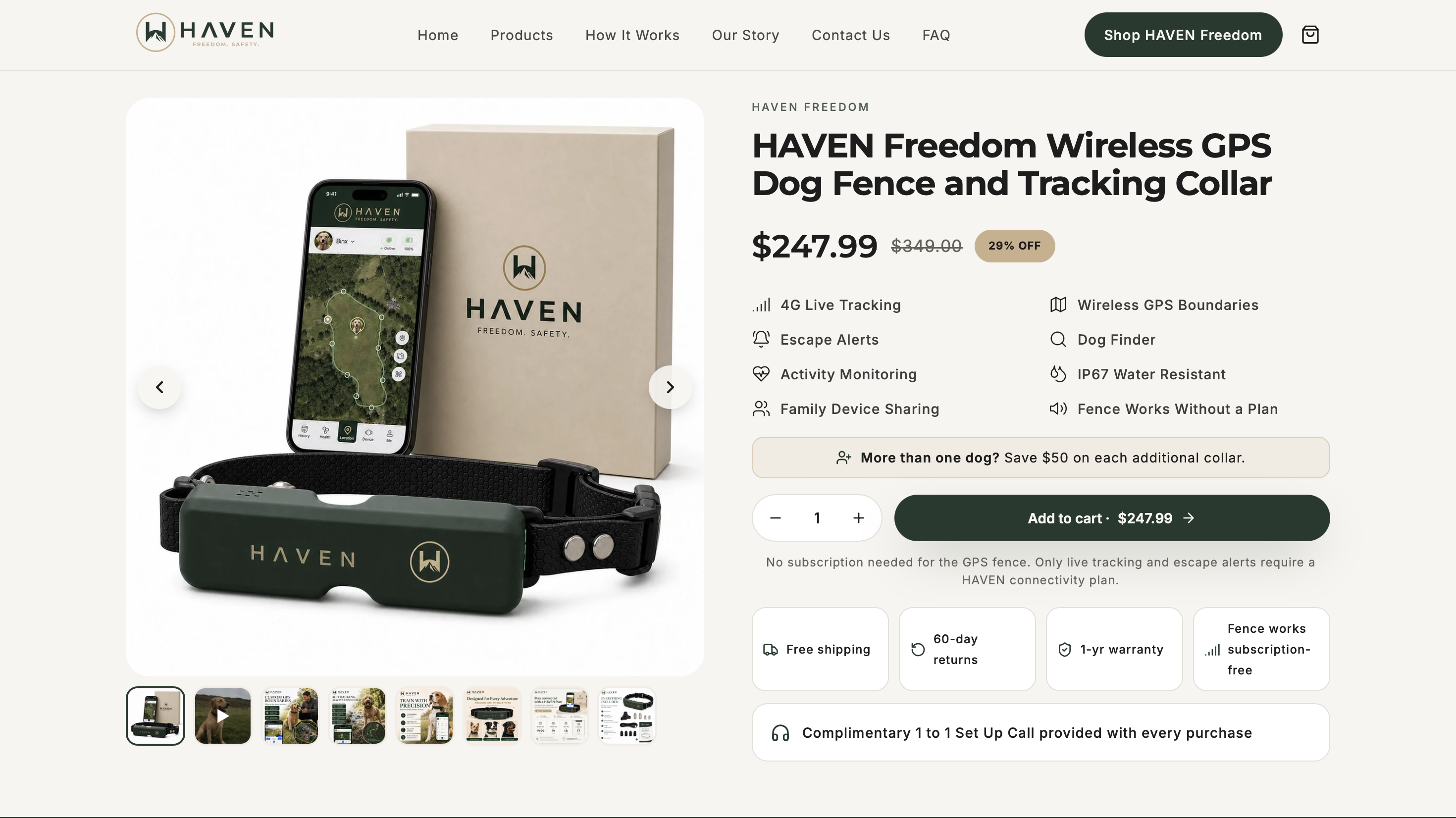
Typical contents include the collar unit, charging cable, and an app to guide boundary setup. The containment function works without a subscription. Optional features like live tracking or escape alerts may require a separate plan.
Before you commit, walk your property boundary the way the training section above describes, since that ten-minute check tells you more about fit than any spec sheet. If the collar doesn’t work out for your specific yard, we offer a 90 day return window. And once the collar is set up, pair it with a real training routine (the boundary training guide covers the exact walk-and-reinforce steps) rather than expecting the hardware to do all the work alone.
When a Budget GPS Collar Is the Right Call (And When It Isn’t)
Editorial teams that cover pet containment gear tend to talk about GPS collars as if they’re always the modern upgrade over “old-fashioned” wired fences or playpens. That framing misses something important: the best containment choice depends entirely on your specific yard, not on which technology sounds newer.
Pick a budget GPS collar when your property has reasonably open sky and you value the flexibility to redraw your boundary as your needs change, or take it with you when you travel. That flexibility is real and valuable, and it’s the main reason GPS has taken over so much of this market in the first place.
Choose a wired fence instead when your yard sits under dense, permanent tree cover, or when you’re staying in the same home for years and want a boundary that never needs re-walking after a storm knocks down a tree. The higher upfront cost buys consistency that GPS simply can’t match in heavy canopy.
And don’t dismiss a simple playpen or exercise panel setup. For puppies, recovering dogs, or anyone testing whether their dog is even a good candidate for off-leash boundary training, it’s often the smartest first purchase, cheap enough that getting it “wrong” costs you almost nothing.
The single tip that matters most: buy based on your yard’s actual tree cover, not on which product has the longest feature list.
— Haven
Sources
- DogNotebook: Best dog fences under $300
- Petful: Best GPS dog fences of 2026
- MyLittleAndLarge: Best GPS dog fences without subscription
FAQ
What Is the Best Budget GPS Dog Fence?
For most owners with open or lightly wooded yards, the HAVEN Freedom collar stands out under $350 because its core containment function works without a required subscription, unlike systems that lock basic fencing behind a monthly fee.
Is SpotOn or Halo Better?
Both are premium-tier systems priced above the $300 range this guide focuses on, and neither is a direct comparison point for budget-conscious buyers; the meaningful question for this price bracket is subscription structure and accuracy under your specific tree cover, rather than focusing only on brand comparison.
Are GPS Dog Fences Worth It?
They’re worth it for open or lightly treed properties where the flexibility of a movable, wire-free boundary outweighs the accuracy tradeoff; they’re a poor fit for dense canopy or tiny lots, where a wired fence performs more consistently.
What Is the Best and Most Affordable Fence for Dogs?
It depends on your yard: GPS collars near $350 suit open properties, while wired or panel-based options often cost less overall for small or heavily wooded lots where GPS accuracy suffers.
How Accurate Are Budget GPS Dog Fences?
Reviewers report premium systems holding 2 to 5 feet of accuracy, while budget collars can drift significantly, especially under tree cover, which is why open sky visibility matters more than any single spec on the box.
Recommended
Keep reading
e collar humane
Humane E Collar Training: 7 Steps, Starting With a Vet Check
See how humane e collar training starts with a vet check, conditions tone and vibration, uses rewards, and reserves static stimulation as a last...
Read the postcoyote safety for dogs
Protect Your Dog from Coyotes in 14 Days with a GPS Boundary
Keep your dog safe from coyotes with immediate steps, yard fixes, hazing, and a 14 day GPS boundary plan you can start today.
Read the postYour adventure starts here
Ready to give your dog more room to roam?
Give your dog more freedom to explore — and give yourself the reassurance of knowing they're never far away.
