

For most farms, a hybrid setup, a physical perimeter reinforced with a GPS-enabled collar, gives the best mix of reliability, safety, and flexibility. Buried wire alone struggles across hundreds of acres, and a collar alone won’t stop a determined dog from testing a weak gate. Combining the two closes both gaps, and a wireless system like a HAVEN Freedom collar handles the acreage problem without a single foot of trenching.
- Coverage without excavation: GPS boundaries scale across large pastures where burying wire would take weeks and cost thousands.
- Live tracking and escape alerts: you know within seconds if a dog crosses the line, instead of finding out hours later.
Choose a full physical perimeter instead when you’re managing high-value livestock with zero tolerance for a breach, when local ordinances restrict electronic collars, or when your insurance carrier requires a fenced boundary as a condition of coverage.
Key Takeaways
Effective farm dog containment combines a physical barrier at high-risk points with a GPS-enabled boundary system, because neither approach alone reliably stops a determined livestock guardian dog.
| Point | Details |
|---|---|
| Hybrid beats single systems | Physical reinforcement at gates and corners paired with electronic containment reduces roaming more than either alone. |
| Wired fences have real limits | Buried wire suits fixed, moderate-sized perimeters but breaks under vehicle traffic and frost heave over time. |
| GPS scales where wire can’t | Wireless collars cover large or irregular acreage without trenching, though tree canopy can affect accuracy. |
| Training sequence matters most | Leash-walk the boundary for several days before granting off-leash freedom, checking collar fit throughout. |
| HAVEN Freedom fits farm use | Its GPS collar creates a no-wire boundary that functions without a subscription, with optional live tracking and escape alerts. |
Table of Contents
- What Are Your Farm Dog Containment Options?
- How Do Wired Electric Fences Work on a Farm?
- Do GPS Collars Actually Work on Large Properties?
- Why Livestock Guardian Dogs Usually Need Both Systems
- Installing and Training a Farm Dog to Respect Boundaries
- What Does Farm Dog Containment Cost?
- Keeping Containment Safe and Reliable Long-Term
- Choosing the Right System for Your Farm
- Find the Right Containment Setup for Your Farm
- Sources
What Are Your Farm Dog Containment Options?
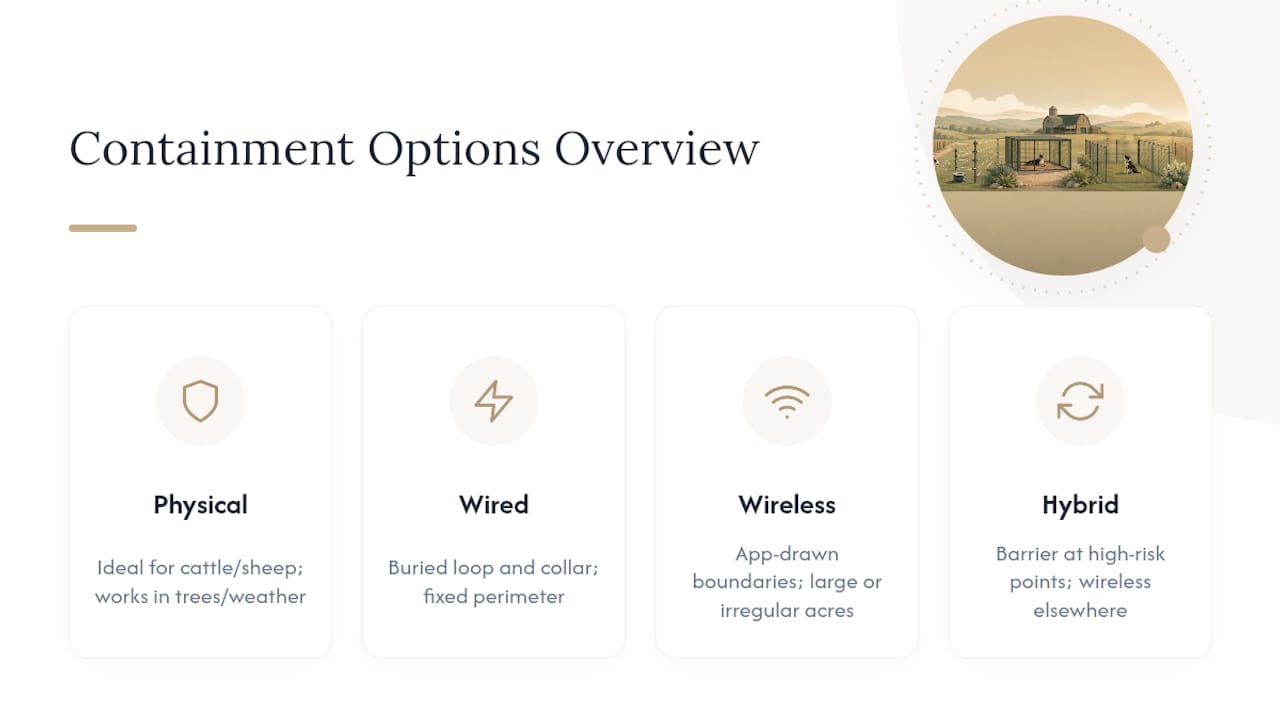
Every farm dog containment strategy falls into one of four buckets, and picking the wrong one wastes money fast.
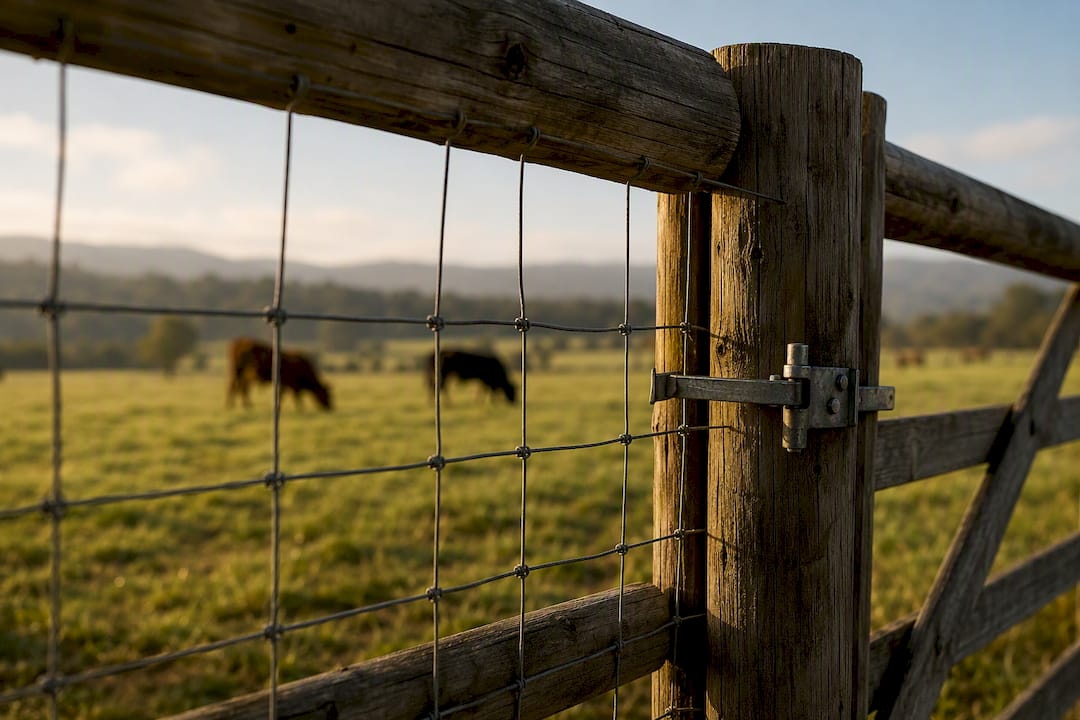
Physical fencing (woven wire, high-tensile, or wood) is the gold standard for livestock separation and works regardless of weather or tree cover. It’s ideal for cattle and sheep operations that need a hard barrier, not just behavioral guidance.
Wired (buried) electric fencing uses a buried loop and a collar receiver to create an invisible boundary. It suits mid-sized, mostly open properties where the perimeter shape is fixed and unlikely to change.
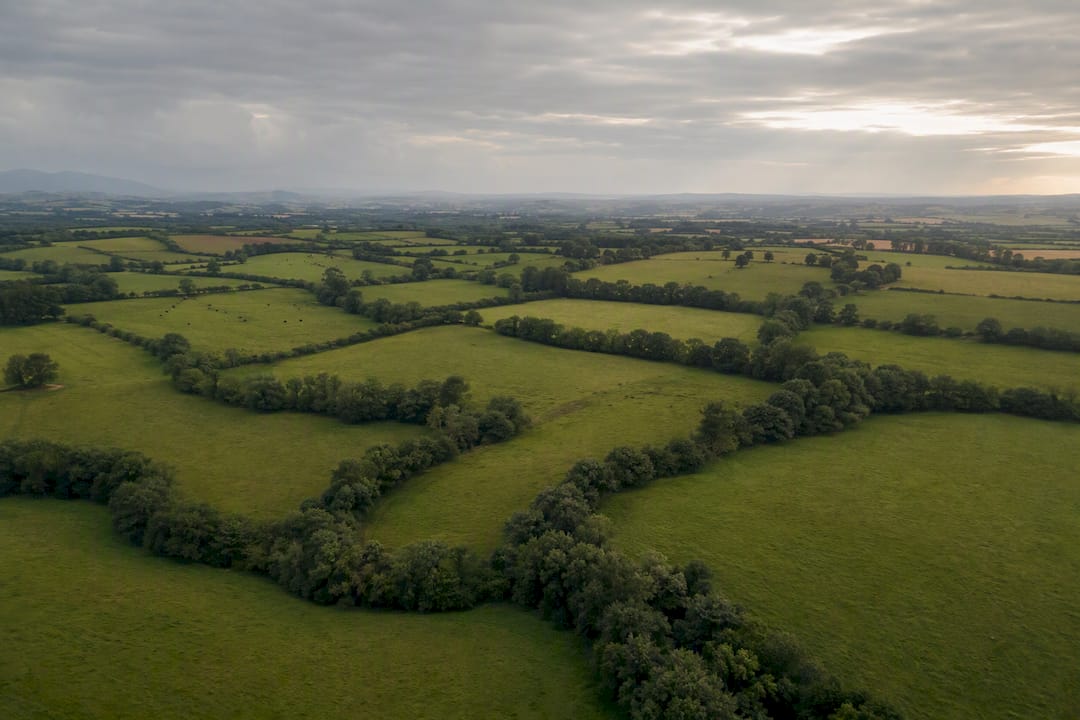
Wireless GPS systems rely on satellite positioning instead of wire, so the boundary can be drawn and redrawn from an app. These fit large or irregularly shaped acreage, rotational grazing setups, and owners who need to move fence lines as pastures change.
Hybrid systems pair a physical or buried barrier at the highest-risk points with a wireless overlay everywhere else.
Decision cues that matter most: total acreage, whether livestock share the space, the dog’s breed and prey drive, how much tree canopy you’re working under, and how often people and vehicles pass through gates. A Great Pyrenees patrolling 40 acres of open pasture has very different needs than a Border Collie on a 5-acre hobby farm with a wooded back edge.
How Do Wired Electric Fences Work on a Farm?
A wired system runs on three parts: a transmitter in a barn or shed, a loop of wire buried a few inches underground (or run along the surface temporarily), and a receiver collar that delivers a warning tone and then a static correction as the dog approaches the buried line. The concept is simple. The execution on a working farm is where it gets complicated.
- Mapping the loop — the wire has to trace the exact boundary you want, including any interior exclusion zones around gardens or equipment.
- Trenching or laying — burying wire 1 to 3 inches deep protects it from mowers and frost heave, but trenching a half-mile perimeter is real labor.
- Testing the loop — a break anywhere in the wire kills the whole system, so continuity testing after installation is not optional.
- Calibrating collar range — the correction zone needs to be wide enough that a dog gets fair warning before crossing.
The practical limits show up over time. Vehicles, plows, and frost cracks sever buried wire, and a farm running tractors or ATVs across the same ground every week will eventually find a break. For perimeters beyond a few thousand feet, Tractor Supply’s guide to wired and wireless systems notes that installation time and wire cost climb fast, which is why very long farm perimeters are rarely buried in full. Wired systems tend to suit calmer, lower-drive breeds better than dogs bred to cover ground, since a scent trail or a fleeing predator can override the correction for a high-drive dog.
Pro Tip: Mark your buried wire route with flags before your first hay cutting or plowing season. It’s the single easiest way to prevent an accidental cut.
Do GPS Collars Actually Work on Large Properties?
Yes, and this is where wireless systems earn their keep. A GPS collar draws a virtual boundary using satellite positioning instead of a physical wire, so there’s nothing to bury, trench, or repair after a storm. You set the shape in an app, and the collar tracks the dog’s position against it in real time.
Accuracy depends on satellite visibility. Open pasture gives a clean signal. Dense tree canopy or steep terrain can degrade GPS precision, and on heavily wooded acreage owners sometimes need to widen the boundary buffer under canopy to keep the boundary tight, a limitation worth planning around before you buy rather than after. Forbes’ review of wireless dog fences points out that GPS-enabled collars can scale to properties spanning hundreds or even thousands of acres, something no buried-wire system can realistically match, but the same review stresses that training always comes before you trust the system unsupervised.
Before choosing a collar, check for:
- Battery life rated for full working days, since a dead collar means no containment at all.
- Durability built for mud, brush, and repeated soaking, not a suburban dog-park spec.
- Multi-dog support if you’re running more than one animal on the same property.
- Live tracking and escape alerts that notify you the moment a dog crosses the line, not after it’s gone.
- Adjustable training modes so corrections start with tone or vibration rather than jumping straight to static.
GPS-based containment increasingly favors collars that separate the fence function from the connectivity plan. A HAVEN Freedom collar keeps the boundary itself working with no monthly fee, and reserves the optional subscription for live map tracking and app-based alerts, which matters on a working farm where you don’t want a lapsed payment to disable the actual fence.
Why Livestock Guardian Dogs Usually Need Both Systems
Livestock guardian dogs are bred to patrol, confront predators, and cover ground independently, which is exactly the temperament that breaks single-layer containment. Field trials on electric fencing for livestock-protection dogs found that adding an electric strand or invisible fencing on top of an existing physical barrier, paired with a structured training program, measurably reduced roaming compared to physical fencing alone, according to AgriLife Research.
The research is blunt about where LGDs actually escape: not through the middle of an open field, but at gates, low sagging sections, corners where fence lines meet at odd angles, and thick brush where a dog can push through unseen. Reinforcing those specific weak points closes most of the gap that a single fence type leaves open.
Farm owners who’ve raised LGDs report the same pattern anecdotally. Dogs muscle through weak wire, dig under fence lines at corners, or squeeze through gaps that would stop a smaller breed, based on accounts shared by Little Avalon Farm. A practical hybrid design might pair a buried bottom strand or apron along pasture edges, where digging is most common, with a GPS overlay covering the rest of the perimeter.
Pro Tip: Walk your fence line once a month specifically looking for LGD-sized gaps at ground level. Most escapes start at a spot you’d never notice from a truck window.
Installing and Training a Farm Dog to Respect Boundaries
Getting containment right is as much about the training sequence as the hardware. Skip steps here and even the best system underperforms.
Site survey first:
- Walk the full perimeter and flag hazards, low spots, and heavy brush.
- Map dog and livestock traffic patterns, not just property lines.
- Plan gate locations and how often people and vehicles will pass through them.
Installation sequence:
- For wired systems, bury the loop, test continuity, then calibrate the collar’s warning zone.
- For wireless systems, set the virtual boundary in the app and walk it once to confirm satellite accuracy, widen the boundary buffer under canopy.
- Fit the collar snugly enough to sit against the skin without pinching, following the manufacturer’s boundary training guide.
Training timeline:
- Days 1 to 3: leash-walk the boundary daily so the dog associates the warning tone with the line itself.
- Days 4 to 10: allow supervised off-leash time inside the boundary, correcting calmly at the edge.
- Week 2 onward: extend to unsupervised time, checking in daily.
Before every session, check collar fit, look for chafing or hair loss under the strap, and confirm signage is posted for visitors and delivery drivers who don’t know the boundary exists.
What Does Farm Dog Containment Cost?
Costs vary by system type and how much of the work you do yourself. AgriLife’s field trials priced electric fencing at roughly $0.33 per meter versus about $0.63 per meter for invisible buried fencing in one trial, a gap that adds up fast once you’re covering a full perimeter. High-tensile physical fencing generally runs more per foot than either electric option once posts and labor are factored in, and professional installation adds significantly to any of these figures versus DIY.
Recurring costs are where budgets often get surprised. Buried wire needs periodic repair after equipment damage. GPS collars need battery replacement or recharging, occasional spare collars for a growing pack, and, for owners who want live tracking and escape alerts, an optional monthly plan on top of the hardware.
- Small farm (5 to 10 acres): a single GPS collar plus reinforced fencing at gates and corners typically lands in the low thousands including hardware and any professional touch-up work.
- Larger operation (50 to 100 acres): wired fencing across that footprint becomes labor-intensive fast, which is exactly why most owners at this scale lean toward GPS coverage with physical reinforcement concentrated only at the highest-traffic weak points, keeping total spend far below what a fully buried perimeter would demand. Detailed cost breakdowns for GPS fence setups can help you model your specific acreage before buying.
Keeping Containment Safe and Reliable Long-Term
Humane containment starts with progressive correction. Every training session should begin with a tone or vibration warning, escalating to static correction only if the dog ignores it, and never as the first response. Watch for red flags like hair loss under the collar strap, skin redness, or a dog that seems anxious near the boundary rather than simply cautious. Any of those signs mean it’s time to loosen the fit, shorten sessions, or pause training entirely.
Common failure points and fixes:
- GPS drift near tree lines: widen the boundary buffer under canopy.
- Broken buried wire: test continuity after every major equipment pass and keep a splice kit on hand.
- Repeated escape alerts at the same spot: treat it as a fence design problem, not a training problem, and reinforce that specific section.
- Collar not holding a charge: replace the battery on schedule rather than waiting for a failure in the field.
Pro Tip: If a dog crosses the boundary three times in the same location within a week, stop blaming the dog. Walk that exact spot and look for what’s actually failing.
When skin irritation, unexplained anxiety, or repeated escapes don’t resolve with basic troubleshooting, bring in a professional installer for wiring issues or consult a vet or trainer, including through a veterinary practice if physical symptoms are involved.
Choosing the Right System for Your Farm
Run through this decision flow before you buy anything. If you’re managing high-value livestock with zero margin for error, start with a physical perimeter and treat electronics as a bonus layer, not the primary defense. If you’re running a typical mixed farm, a hybrid setup, physical reinforcement at gates and corners paired with GPS coverage everywhere else, handles the vast majority of situations. If burying wire across your acreage isn’t realistic, or you want the flexibility to redraw boundaries as pastures rotate, go GPS-first.
This is exactly the gap a HAVEN Freedom collar is built to fill: no buried wire, live tracking and escape alerts when you want them, and a fence that keeps working even without an active subscription.
Before you buy:
- Walk your property and note gates, corners, and dense brush where physical reinforcement matters most.
- Confirm your acreage and canopy density to decide if a widening the boundary buffer under canopy is going to have to happen.
- Build a two-week training plan before the collar arrives, not after.
A Note From the Field
The most common mistake we see isn’t choosing the wrong fence type. It’s forgetting the gate. Owners spend weeks perfecting a boundary line and then leave a swinging gate as the one spot with no reinforcement at all, and that’s where dogs get out. Prioritize training time over hardware upgrades. One farm owner told us her Anatolian Shepherd tested every fence weakness within his first month; the collar caught what the fence missed.
— Haven
Find the Right Containment Setup for Your Farm
Buried wire and high-tensile fencing both do their jobs, but they demand trenching, ongoing repair, and a fixed layout that doesn’t bend when your grazing plan changes. If you’re covering real acreage, chasing wire breaks or paying for a professional trench crew stops making sense the moment you can draw the same boundary from an app instead.

A HAVEN Freedom collar gives you that boundary without digging a single trench, plus live tracking and escape alerts for the moments a dog does test the line. The fence itself works with no required subscription, so a lapsed payment never leaves your dog unprotected. Read how the no-subscription fence functions, then check the product page to size a collar for your acreage and place your order.
Sources
Key references include the AgriLife electric fencing study, Forbes’ wireless fence roundup, and Tractor Supply’s installation guide.
- Implementation of Electric Fencing for Establishing Effective Livestock-Protection Dogs (AgriLife Research)
- The Best Wireless Dog Fences—And What To Know Before Using One (Forbes Personal Shopper)
- Electric Dog Fences 101: Wired and Wireless (Tractor Supply)
Recommended
Keep reading
en
Puppy E-Collar Age: When Is It Safe, and What to Use First
No vet-backed minimum age exists for shock collars on puppies. See what vets advise, what to do before 6 months, and how a GPS...
Read the postcharge dog collar camping
Charging a Dog Collar at Camp: Skip Bedding, Use a Hard Surface
Charge a dog collar safely at camp with a power bank, original cable, and solar or car backup. Follow National Park Service battery safety...
Read the postYour adventure starts here
Ready to give your dog more room to roam?
Give your dog more freedom to explore — and give yourself the reassurance of knowing they're never far away.
