

Yes, you should usually start searching tonight rather than waiting for daylight. Do a quiet 360° check of your yard and last known location, call your local shelters, grab a headlamp with a red-light mode, and start logging any sightings with time and location. Follow guidance from the AKC and KC Pet Search & Rescue, and consider a GPS collar like HAVEN Freedom to shrink the search radius fast.
TL;DR:
- Nighttime searches can be more effective when the dog is injured, hiding close to the last sighting, or in safe, open terrain, but are less useful near dangerous features like cliffs or traffic.
- Most lost dogs hide in small, enclosed spaces such as under decks, inside sheds, or in dense brush, especially after feeling scared and in survival mode.
- Using a GPS collar with live tracking and setting scent stations can significantly reduce search time by narrowing the search area and encouraging the dog’s approach.
- Approaching a sighting calmly and never chasing the dog increases the chance of a safe reunion rather than further flight.
- Early notification via alerts on a GPS device can save hours of lost time, shifting from hours-long searches to quick, targeted recovery.
Table of Contents
- Why Night Can Help You Find a Lost Dog, and Where It Falls Short
- Where Do Lost Dogs Hide at Night?
- How to Search for Your Dog at Night: A Step-by-Step Plan
- What to Do the Moment You Spot Your Dog
- GPS Trackers, Thermal Drones, and Camera Footage: What Actually Helps
- Preventing the Next Escape and Improving Future Odds
- What Actually Works When Panic Sets In
- Find Your Dog Faster With HAVEN Freedom
- Where to Get Help Fast
- Sources
- FAQ
Why Night Can Help You Find a Lost Dog, and Where It Falls Short
Darkness actually works in your favor more often than people expect. Quiet streets make barking carry farther, and a flashlight beam catches the reflective shine in a dog’s eyes from surprising distances. Frightened dogs that hunker down all day sometimes only move once traffic and foot noise die off, which is exactly when a nighttime search can pay off.
That said, night searching isn’t automatically the right call. It works best when your dog is injured and likely staying put, you’ve had a credible sighting, or the terrain is open and safe to cover in the dark. It works worse in unfamiliar areas with cliffs, deep water, or heavy traffic, and when you have zero leads to work from.
- Quieter nights mean better hearing for you and calmer conditions for a scared dog
- Reflective eyeshine helps confirm a sighting from a distance
- Rain, wind, and dense brush cut visibility and scent trails
- A skittish dog behaves differently than a friendly, food-motivated one, so adjust your approach accordingly
Where Do Lost Dogs Hide at Night?
Lost dogs don’t wander aimlessly. Once fear kicks in, most drop into what searchers call survival mode: instinct takes over, and the dog prioritizes safety over anything familiar, including your voice. That’s why a normally obedient dog might not come when called, and why understanding this shift changes how you search.
Dogs in this state tend to tuck into small, dark, enclosed spaces rather than staying out in the open. Watch for these common refuges first:
- Under decks, porches, and crawl spaces
- Inside or behind sheds and outbuildings
- Storm drains, culverts, and drainage ditches
- Dense brush along field edges and tree lines
- Behind retaining walls or in gaps between structures
A bold, confident dog might range for miles along roads and trails. A timid or trauma-triggered dog usually holes up close to where it was last seen. Match your search radius to the personality, not just the clock.
How to Search for Your Dog at Night: A Step-by-Step Plan
First 30 minutes. Don’t drive around yet. Walk your own property and the block around it in a slow, deliberate 360° sweep, checking every hiding spot listed above. This single step recovers a surprising number of dogs before a wider search ever starts, and it matches what the AKC recommends as the first move in any lost-dog situation.
- Check your own yard, garage, and every low, dark space within 100 feet of the escape point.
- Call neighbors directly instead of just posting online. People check messages slower than they answer a knock.
- Pull any doorbell or driveway camera footage you have access to, and ask neighbors to check theirs too.
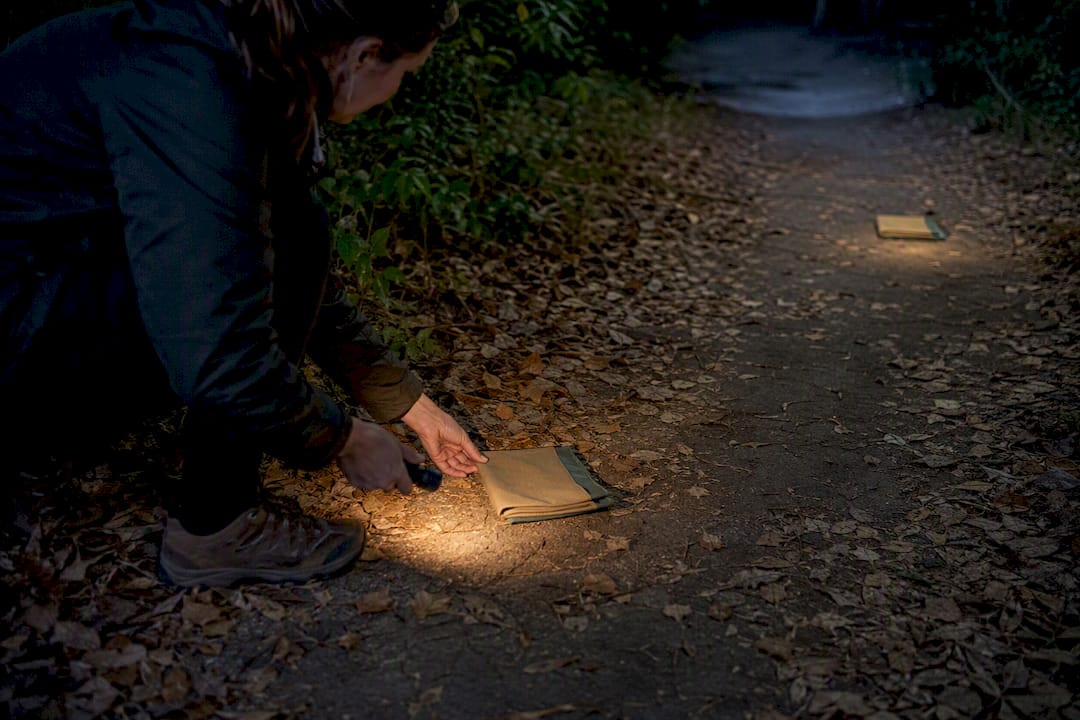
- Set out an unwashed piece of your dog’s bedding and a bowl of familiar food near the last known location.
- Map every reported sighting with a time, address, and direction of travel before you move your search team.
- Post to local lost-pet groups and community alert pages with a clear, front-facing photo and a “do not chase” note.
- Call your local shelters, animal control, and emergency vets. Many take intake overnight and appreciate an early heads-up.
- If the search stretches past a couple of hours with no leads, bring in a search-and-rescue group or a thermal-drone operator.
What to carry: a headlamp with a red-light mode (it spooks dogs less than white light), a fully charged phone, a slip lead, high-value treats, and something reflective to wear yourself. Small search teams of two or three work better than a crowd. A pack of people calling and spreading out tends to scatter a frightened dog rather than draw it in, according to search-and-rescue guidance.
Pro Tip: Set up two or three scent stations instead of one big one. A frightened dog often circles a familiar smell for hours before committing to approach it, so multiple stations around the last-seen area give it more chances to feel safe enough to come closer.
What to Do the Moment You Spot Your Dog
Spotting your dog is the easy part. What you do in the next sixty seconds decides whether you get a reunion or another chase in the dark. The instinct to run toward a scared dog is exactly the wrong move.
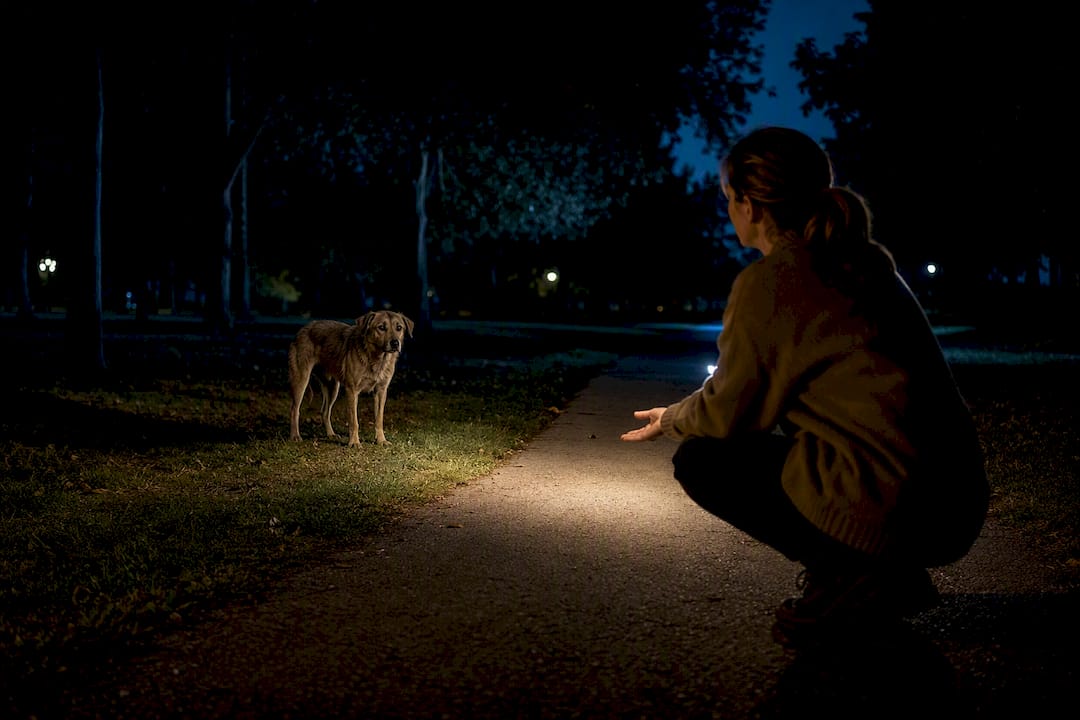
Stop moving. Turn your body sideways instead of facing the dog head on, avoid direct eye contact, and drop to a crouch or sit if you can. Speak low and calm, or say nothing at all. Let the dog approach on its own terms, tossing a treat toward it rather than reaching out.
Whether or not the dog comes to you, record the encounter properly:
- Exact time of the sighting
- GPS pin or nearest address
- Direction the dog traveled
- A photo or video if you can get one safely
- Your name and contact info if you’re reporting it to someone else’s search
One overlooked risk deserves its own mention: night searches near roads, railways, retaining walls, and open water account for a real share of searcher injuries, which is why KC Pet Search & Rescue stresses reflective clothing and sticking to areas you actually know. Never enter fenced private property without asking first, even if you’re certain your dog is behind that fence.
GPS Trackers, Thermal Drones, and Camera Footage: What Actually Helps
Technology narrows your search radius; it rarely finishes the job alone. A GPS collar with live tracking tells you where your dog is right now, which turns a search of an entire neighborhood into a search of one backyard. That’s a different tool from a boundary-only collar, which only alerts you that your dog left a zone, not where it went afterward.
Thermal imaging and drones can help in the right conditions. Thermal contrast against a cool night ground often shows up clearly in open fields, creek corridors, and golf courses, but dense tree canopy, buildings, and rough weather all cut visibility. Drone operators also need to check local airspace rules before flying at night.
- Confirm a sighting before deploying thermal or drone resources; unfocused sweeps waste hours
- Pull last-known GPS coordinates from a tracking collar as soon as an escape alert fires
- Check camera battery and signal status regularly if your setup relies on Wi-Fi range
Pro Tip: If your collar has a sound, light, or Bluetooth radar finder, use it once you’re within a block or two of the last signal. It’s often faster than continuing to search visually in the dark.
Preventing the Next Escape and Improving Future Odds
A recovery tonight doesn’t fix the reason this happened. Fixing that matters more than any single search technique.
- Keep microchip registration and tags current with your real phone number
- Save a recent, clear, full-body photo somewhere you can grab in seconds
- Double-check gate latches and add a second gate where dogs test the fence line most
- Build consistent boundary habits with a GPS fence and training plan rather than relying on physical fencing alone
- Review your setup with practical boundary training tactics that actually stick
What Actually Works When Panic Sets In
The owners who recover their dogs fastest are usually the calmest ones, not the loudest. I’ve watched search efforts go sideways when someone sprints toward a spooked dog the second they spot it, undoing hours of careful tracking in a few seconds.
Two things matter more than anything else: map every sighting before you act on it, and never chase. Sit down, wait, let the dog choose to close the distance. It works more often than running ever does.
— Haven
Find Your Dog Faster With HAVEN Freedom
A search plan works, but a GPS collar changes the math before the search even starts. HAVEN Freedom pairs a wireless boundary with live 4G tracking, so instead of walking a whole neighborhood in the dark, you’re checking one last-known point.
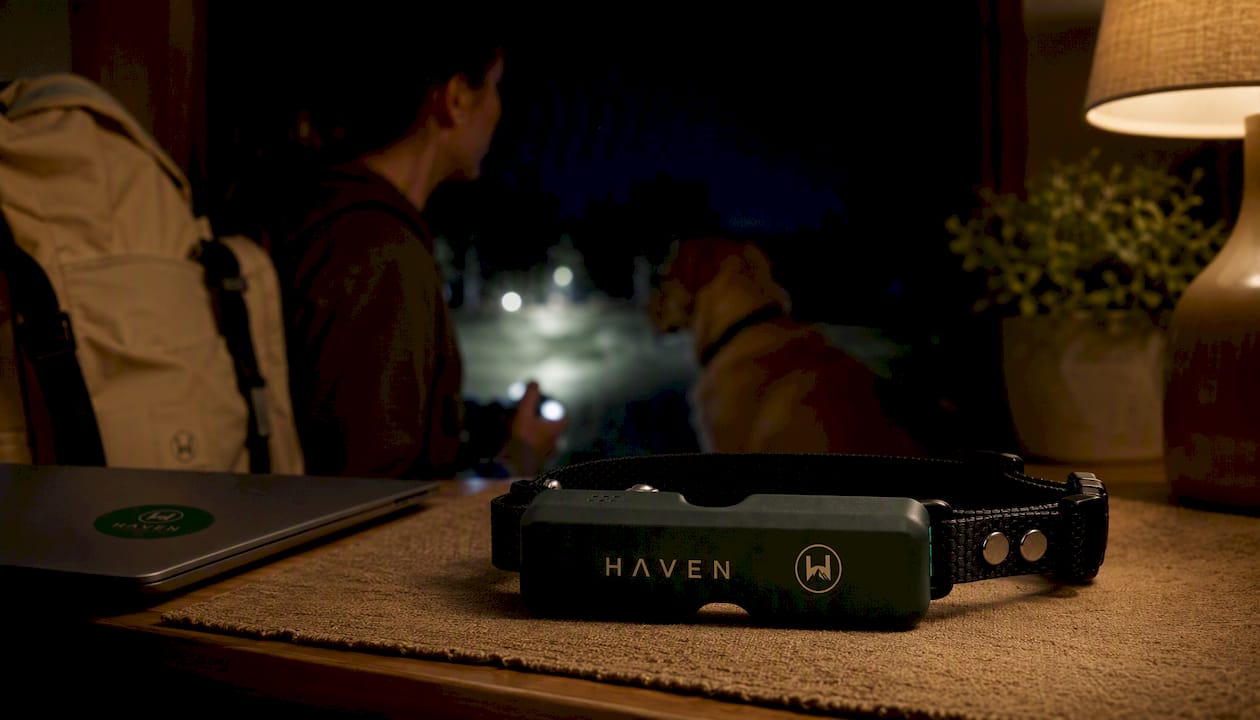
- Live tracking shows real-time location the moment your dog crosses the boundary
- Escape alerts hit your phone instantly, cutting the head start a dog gets before you even notice
- The dog-finder combines sound, light, and Bluetooth radar to close the final few hundred feet
- Boundary fencing works with no buried wires and no required subscription; a plan is only needed for live tracking and app features
Picture a 2 AM escape alert instead of a 6 AM discovery that the gate was open all night. That six-hour head start is the entire difference between a five-minute recovery and an all-night search. Set up your dog’s GPS fence and tracker before the next escape happens, not after.
Where to Get Help Fast
The AKC covers first-48-hour priorities. KC Pet Search & Rescue details sighting and mapping protocols. Your microchip registry and local shelters confirm intakes and matches.
Sources
- How To Find a Lost Dog at Night | KC Pet Search & Rescue
- What To Do If Your Dog Is Lost — AKC expert advice
- How to find a lost dog at night: The complete guide | PetRadar
- Understanding survival-mode behavior in lost dogs — Lost and Found Pet Services
FAQ
Will a Lost Dog Travel at Night?
Some do, especially bold or high-drive dogs covering long distances once traffic and noise drop off, while timid dogs tend to stay hidden close to where they went missing.
What Is the 3-3-3 Rule for Dogs?
It’s a rough timeline some rescuers use: roughly 3 days of fear and hiding, 3 weeks of settling into a routine (even a stray one), and 3 months before a dog feels fully secure again, though every dog’s timeline varies.
What Can Attract a Lost Dog Back Home?
Familiar scent items like unwashed bedding, a bowl of regular food, and a calm, quiet environment work better than loud calling. A GPS collar with a sound or light finder feature, like HAVEN Freedom’s, can also help close the final distance once you’re nearby.
Where Do Lost Dogs Hide During the Day?
Small, dark, enclosed spaces such as under decks, inside sheds, storm drains, and dense brush along field edges, the same spots worth checking first at night when a dog may finally move.
Recommended
Keep reading
en
Keep Your Dog Safe at the Campsite with a 14 Day Boundary Plan
Follow campsite first safety: learn six foot leash rules, five containment options, a 14 day boundary training plan, and GPS tracking as a recovery...
Read the posten
10 Minute Audit to Make Your Yard Escape Proof for Dog Owners
Run a 10 minute audit, fix dig sites and gate faults today, then follow a behavior aware, prioritized repair plan with layered containment and...
Read the postYour adventure starts here
Ready to give your dog more room to roam?
Give your dog more freedom to explore — and give yourself the reassurance of knowing they're never far away.
