

For most big yards, a GPS-enabled boundary or a hybrid plan that pairs GPS boundaries with physical fencing at high-risk edges beats a single buried-wire loop. Test the system on your actual property before trusting it, train your dog in stages, and treat something like the HAVEN Freedom collar as a practical starting point rather than a plug-and-forget fix.
TL;DR:
- GPS boundaries with hybrid plans are most effective for large, irregular properties and should be tested thoroughly in different terrain and times of day.
- Tree cover, slopes, and proximity to roads can degrade GPS accuracy, requiring buffer zones or physical fencing at high-risk edges.
- Physical fences remain essential near hazards like roads and water, especially on properties larger than five acres or with dense woods, where GPS drift is more pronounced.
- Proper setup involves walking and testing the boundary from multiple directions, then gradually training the dog with staged rewards and warnings.
- HAVEN Freedom offers a customizable, wire-free option with no ongoing subscription, suitable for irregular lots and multiple dogs needing independent profiles.
Table of Contents
- What Are the Main Types of Big Yard Dog Containment?
- How Do Trees, Slopes, and Roads Change Your Containment Plan?
- How Do You Set Up and Test a Big Yard Containment System?
- What Do Hybrid Containment Setups Actually Look Like?
- Does Breed or Size Change Which Containment System Works?
- What Legal Rules Apply to Big Yard Dog Containment?
- Why We Recommend HAVEN Freedom for Big Yard Setups
- A Straightforward Way to Get Started
- Sources
- FAQ
What Are the Main Types of Big Yard Dog Containment?
Three approaches dominate outdoor dog enclosures, and each solves a different problem.
In-ground, buried-wire fences run a physical wire around the property line, and a receiver collar corrects the dog as it nears the loop. They’re permanent, they don’t drift, and they work under heavy tree cover where GPS struggles. The tradeoff is labor: trenching a few acres is a weekend project, if not a paid contractor job, and the boundary can’t move once it’s buried.
Wireless transmitter systems broadcast a circular signal from a base station, typically covering a half-acre to a few acres depending on the model. They install fast and no digging is required, but the circle shape rarely matches an irregular lot, and range drops near metal buildings or dense brush.
GPS dog fences use satellite positioning instead of a buried loop or a fixed transmitter, letting you draw a custom boundary shape in an app to match your actual property lines. That flexibility is the appeal for large dog containment solutions on acreage, but accuracy depends on signal quality, not wire.
Here’s how the three stack up on what matters most for a big yard:
- In-ground wired: rock solid accuracy, zero drift, but permanent and labor intensive to install
- Wireless circular: fast setup, portable, but limited to a rough circle and weaker range
- GPS/virtual: custom shapes, no digging, but performance depends on satellite signal and terrain
Correction modes matter as much as boundary type. Look for a system offering tone and vibration warnings before any static correction, and multiple warning zones rather than a single alert right at the line.
How Do Trees, Slopes, and Roads Change Your Containment Plan?
Tree canopy, hills, and nearby buildings are the biggest variables in whether a GPS boundary holds up, because dense cover and structures can degrade satellite signal and increase drift. A wooded five acres behaves nothing like an open pasture, even with the same collar.
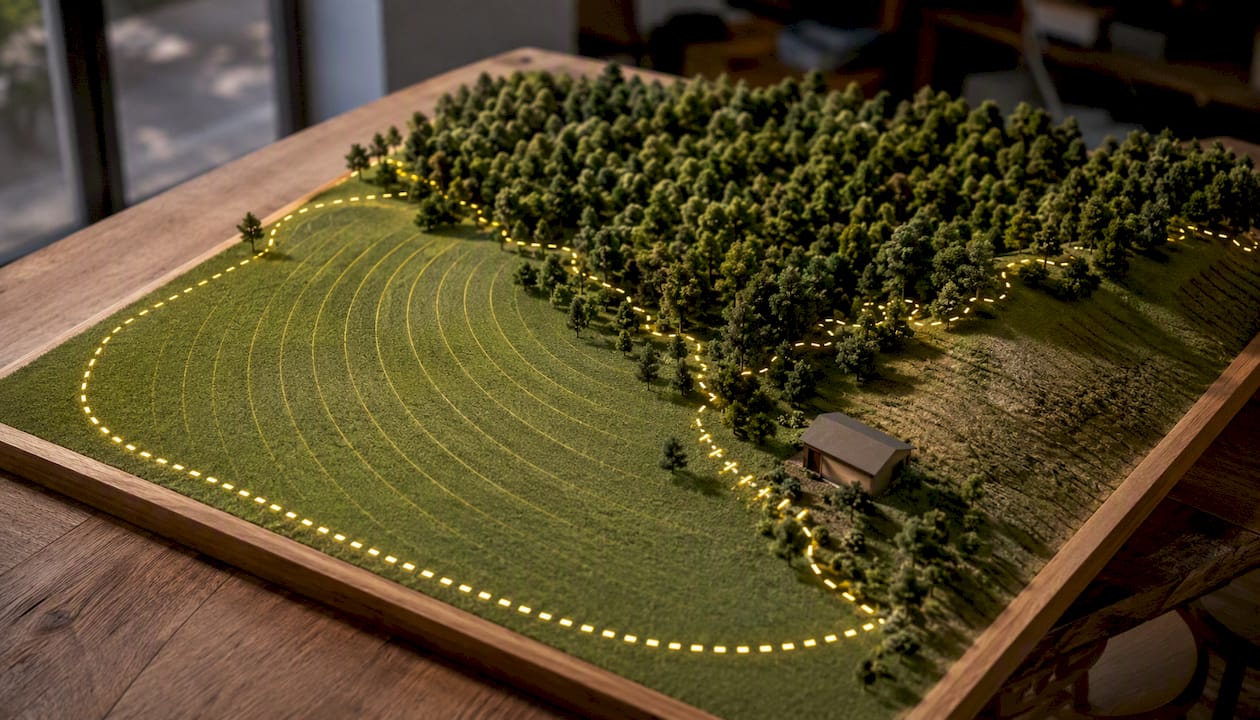
A physical fence stops being optional once you’re near a road, a pond, livestock, or any edge where a few feet of error has real consequences. Electronic boundaries can lag by several feet in tough conditions, and that margin is fine in the middle of a field but dangerous next to traffic. A local guide to rural property boundary planning recommends setting the virtual line well inside the actual property edge near any high-consequence hazard, never right on top of it.
Some rough rules of thumb for matching system to property:
- Under an acre, open terrain: wireless circular or GPS both work fine
- One to five acres, mixed open and wooded: GPS with a wide buffer near tree lines, physical fencing near roads
- Five-plus acres or heavy woods: hybrid plan is close to mandatory, since GPS alone will struggle under canopy
- Waterfront or livestock-adjacent property: physical fence at that edge, no exceptions, regardless of acreage elsewhere
Pro Tip: Walk your intended boundary line at dawn and dusk, not just midday. Canopy density and even morning fog can change how a GPS collar reads the line, and testing at one time of day only gives you a false sense of confidence.
How Do You Set Up and Test a Big Yard Containment System?
A good containment plan is a project with steps, not a purchase you unbox and trust immediately.
Start with a property audit:
- Walk the entire perimeter and note hazards: roads, water, neighbor property lines, livestock areas
- Decide on a permitted zone that sits inside those hazards, not against them
- Mark the candidate boundary with visible flags every 10 to 15 feet
Then run a testing routine before your dog ever wears the collar unsupervised. The recommended method is to walk the boundary from multiple compass directions and speeds, noting exactly where the collar responds relative to your flags. If the response point wanders by more than a few feet between passes, move the whole boundary inward until it’s consistent.
Once the line is tested, stage the training itself:
- Week one: leash or long-line walks along the flagged boundary, letting the dog feel the warning tone without full freedom
- Week two: supervised off-leash time inside the boundary, rewarding heavily near the edges
- Ongoing: gradually extend unsupervised time only after repeated consistent responses
If alerts feel inconsistent at any stage, don’t push forward. Havenfreedom’s own boundary setup walkthrough covers this same audit-then-test sequence in more detail, and it’s worth following before day one of training.
What Do Hybrid Containment Setups Actually Look Like?
Most experienced acreage owners don’t rely on one system. They layer them.
A common setup pairs a physical fence along the road-facing edge with a GPS boundary covering the open fields behind the house, so the highest-risk line gets a wire and the low-risk acreage gets flexibility. Another version uses a small fenced run for overnight containment and switches to GPS freedom during supervised daytime hours, giving the dog far more usable space without sacrificing safety at night.
Keeping any of these plans reliable over time takes routine upkeep:
- Charge the collar on a fixed schedule rather than waiting for a low-battery alert mid-walk
- Re-test the boundary every few months, since dense summer foliage changes signal conditions from bare winter branches
- If you’re running multiple dogs, confirm the system supports independent boundaries or profiles per dog
- Keep a physical ID tag and microchip current as a backup, not a replacement, for the electronic system
Build a fallback rule into the plan from day one: if a collar loses charge or drops signal, the dog goes on leash or under direct supervision until it’s resolved. A dead collar isn’t a minor inconvenience on five acres.
Does Breed or Size Change Which Containment System Works?
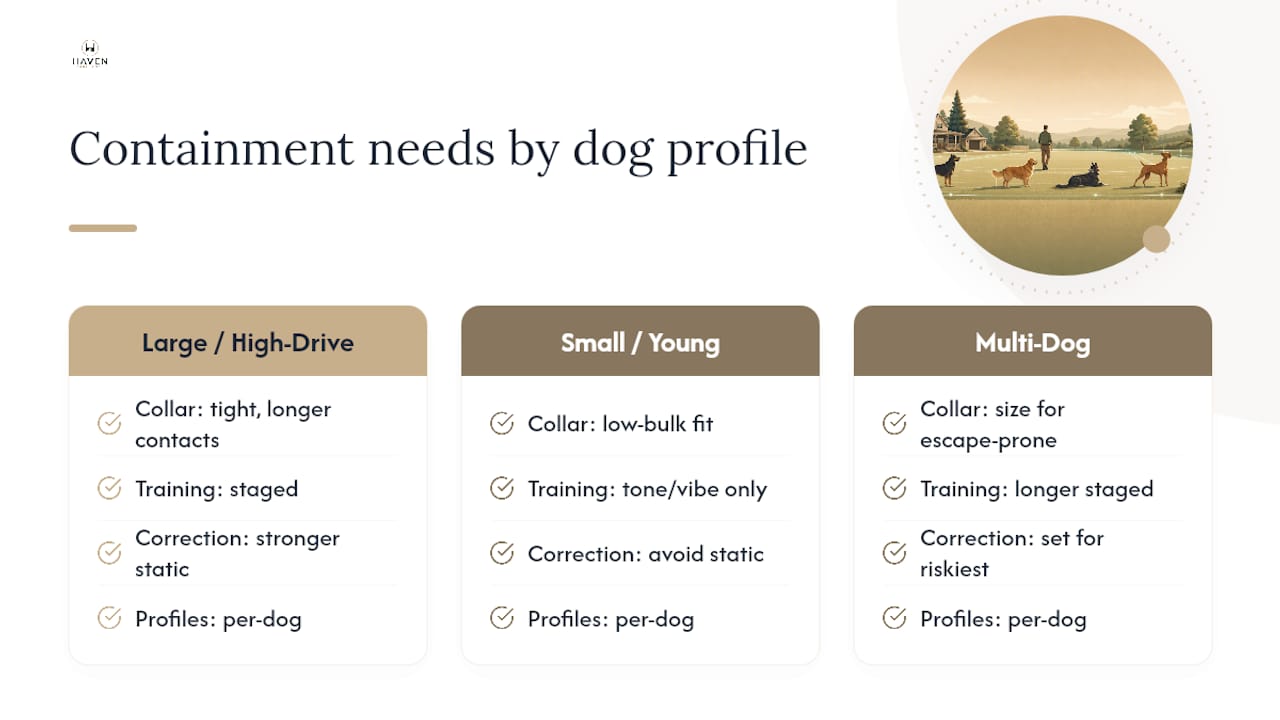
Size and temperament shift the calculus more than most owners expect. A 90-pound livestock guardian breed with a strong prey drive needs a system with real range and a correction mode strong enough to interrupt a chase, since some large or working breeds will run through a mild static correction if the trigger (a deer, a passing car) is compelling enough. A collar’s fit matters here too: heavier coats on breeds like Great Pyrenees or Bernese Mountain Dogs can insulate against static contact points, so proper collar tightness and contact point length need checking more often than on a short-haired dog.
Smaller and lighter breeds need a collar unit that isn’t disproportionately bulky, and puppies under the weight and age minimums most manufacturers list shouldn’t use static correction modes at all. Tone and vibration-only training modes are the better starting point for young or sound-sensitive dogs regardless of size.
Multi-dog households add another layer. Herding breeds and terriers with strong independent streaks often test boundaries more aggressively than retrievers, so the staged training window may need to run longer for those temperaments before earning unsupervised freedom. If you have a mixed pack, size the correction levels and boundary zones to your most escape-prone dog, not your most compliant one, and confirm the system can manage separate collar profiles.
What Legal Rules Apply to Big Yard Dog Containment?
Local and state leash and containment laws vary, and “electronic fence” isn’t a universal legal substitute for a visible boundary in every jurisdiction. Some municipalities and homeowners’ associations require a posted sign or a physical fence in addition to any electronic system, particularly for dogs previously flagged for aggressive behavior or repeat escapes. Others regulate containment differently for properties bordering public roads or shared trails.
Before installing any system, check your specific city or county ordinance and, if you belong to one, your HOA’s covenants. Rules that apply to buried-wire fencing sometimes don’t mention GPS or wireless systems at all, which can leave owners in ambiguous territory rather than clearly compliant or noncompliant. When in doubt, a physical fence at property lines adjoining public space is the safer legal and practical default, with electronic boundaries used for the interior acreage.
Liability also doesn’t disappear because a containment system exists. If a dog escapes any type of boundary and causes damage or injury, most jurisdictions still hold the owner responsible regardless of what technology was in use. That’s one more reason the buffer-zone approach near roads and neighboring property matters as much for legal exposure as for safety.
Why We Recommend HAVEN Freedom for Big Yard Setups
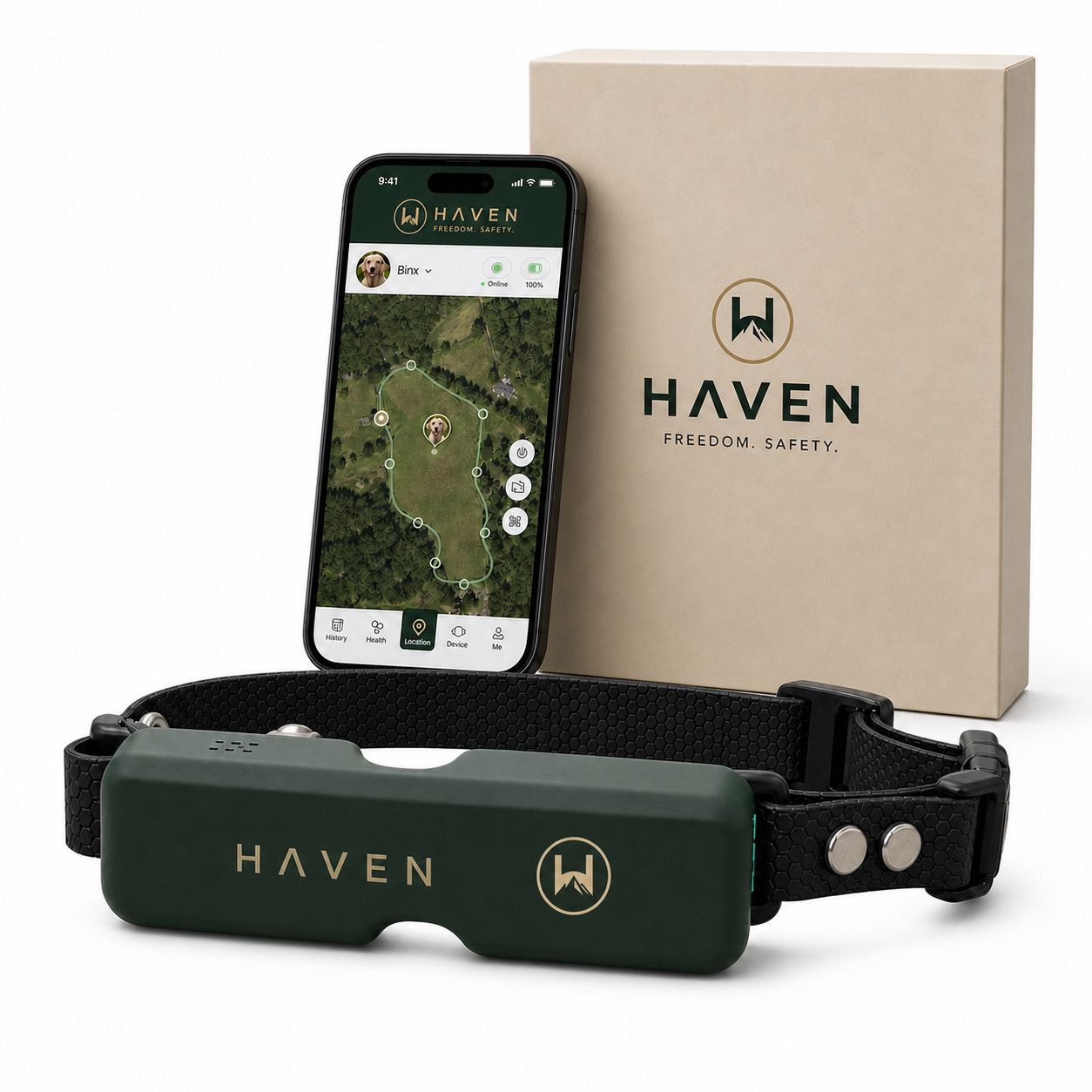
HAVEN Freedom fits the property-first approach because it’s built around the two things that actually matter for acreage: no trenching, and a boundary shape you control. The collar uses dual-band positioning to draw custom zones in the app, so an irregular lot with a pond on one side and a driveway on the other doesn’t force you into a circle or a straight wire run. Escape alerts and a sound, light, and Bluetooth-based dog finder handle the part every containment system eventually needs: recovery, not just prevention.
Test it the same way you’d test any GPS system on your land. Walk your flagged boundary under your heaviest tree cover first, since that’s where dual-band positioning gets stressed the most. If you run more than one dog, confirm each animal’s collar and profile independently before trusting them together off leash. Check the charging workflow against your actual routine, not the marketing photos, because a collar that’s dead by evening walk time doesn’t help you.
One detail worth noting: HAVEN Freedom’s fence function doesn’t require a monthly subscription. A plan is only needed if you want live 4G tracking and app-based extras, which keeps the core containment feature usable without ongoing cost. Havenfreedom’s own 14-day boundary training plan walks through the staged rollout described earlier, adapted specifically to this collar’s warning zones and correction settings.
— Haven
A Straightforward Way to Get Started
Havenfreedom is the alternative to trenching a wire loop across five acres: you draw the boundary in an app, adjust it whenever your property needs change, and pay nothing ongoing for the core fence feature. That last part matters if you’ve been pricing out wired installation quotes or comparing subscription-locked competitors, since the collar’s containment function works without a recurring plan.
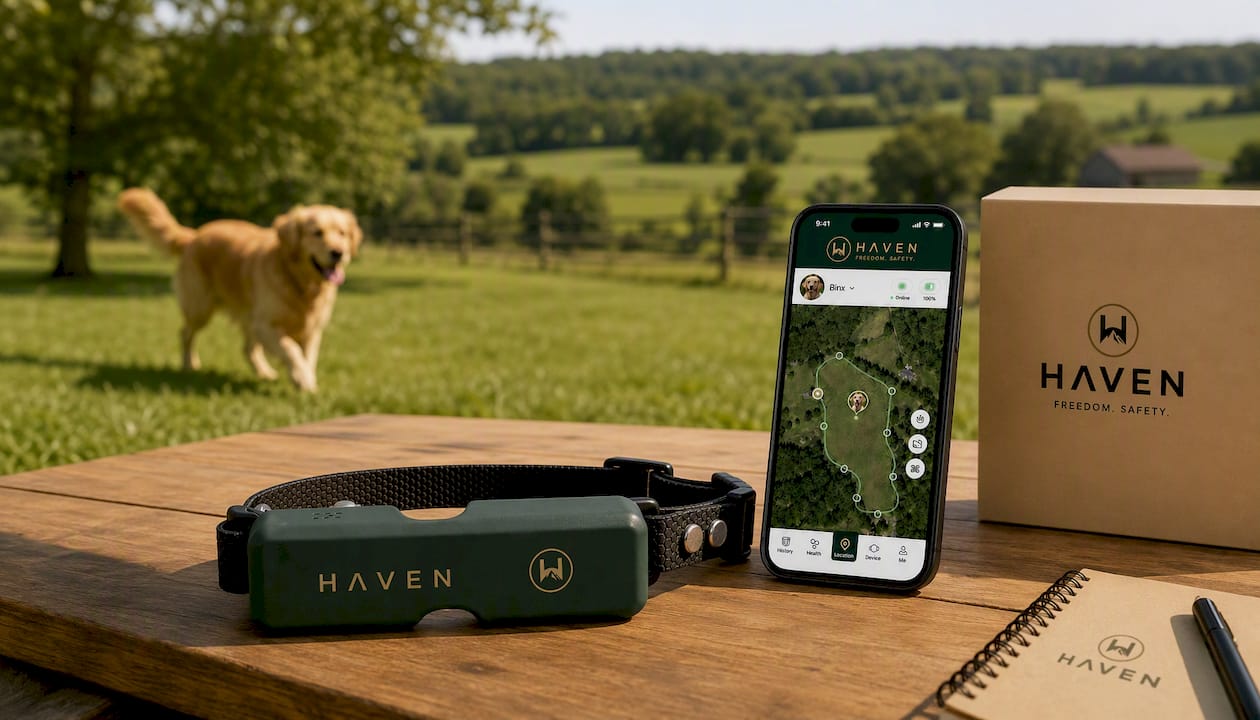
It suits owners with irregular lots, mixed open and wooded terrain, or multiple dogs who need independent boundary profiles more than it suits a small fenced backyard where a simple wireless circle would do the job. If your land has a pond, a road frontage, or a shape no circular transmitter could ever match, this is built for exactly that case. Pair it with a sturdy identification collar as your physical backup, run the property test from the checklist above, and start the staged training plan once your boundary holds steady. Check the HAVEN Freedom collar page for current specs and order details before your next weekend at home.
Sources
Claims about GPS accuracy and evaluation criteria draw on the AKC’s guide to evaluating GPS dog fences, veterinary welfare context from the AVMA’s containment research, and product comparisons from Forbes’s wireless fence roundup. For hands-on setup, see Havenfreedom’s guides on boundary accuracy and boundary training. If your dog struggles with any stage, a certified dog trainer can shorten the learning curve considerably.
- How to Evaluate a GPS Dog Fence: What Matters for Dog Safety
FAQ
What is a good wireless dog containment system for a large area?
GPS-based systems tend to outperform fixed-radius wireless transmitters on large or irregular acreage because they let you draw a custom boundary shape rather than a circle. Test any system under your specific tree cover and terrain before trusting it fully, since performance varies by environment.
What is the best outdoor fence for large dogs?
There’s no single best fence for every large dog. A hybrid setup, physical fencing at high-risk edges like roads or water, combined with a GPS boundary for open acreage, gives large or strong-willed breeds the range they need without sacrificing safety at the dangerous parts of the property.
What is the best dog containment fence?
The best system is the one that matches your terrain and gets tested on your actual property, not the one with the longest feature list. GPS options like HAVEN Freedom work well for varied acreage since they skip trenching and let you shape the boundary to your land.
How do you block off a yard for dogs?
Map hazards first, mark a candidate boundary with flags set inside those hazards, then walk it from multiple directions to confirm consistent response before letting your dog off leash inside it. A physical fence segment near roads or water, paired with a GPS or wireless boundary elsewhere, covers most big yard layouts.
Recommended
Keep reading
en
14 Days to Keep Your Dog on Your Property With a Boundary Plan
Compare fences, fence upgrades, GPS collars, and pens, then follow a 14 day boundary plan to reduce escapes and choose a setup that fits...
Read the poste collar humane
Humane E Collar Training: 7 Steps, Starting With a Vet Check
See how humane e collar training starts with a vet check, conditions tone and vibration, uses rewards, and reserves static stimulation as a last...
Read the postYour adventure starts here
Ready to give your dog more room to roam?
Give your dog more freedom to explore — and give yourself the reassurance of knowing they're never far away.
