

For unattended safety, a physical barrier beats every other option. For flexible, changeable boundaries around a garden bed, pool, or specific room, pair reward-based boundary training with a wireless or GPS system like the HAVEN Freedom collar. Never leave a dog alone in an unfenced area on training or a device alone until the behavior is proven reliable across weeks, not days.
TL;DR:
- Physical barriers like gates or fences remain the most reliable way to prevent dog escapes without supervision, especially in high-value distraction areas.
- Boundary training typically takes weeks or months, requiring consistent rewards and visual cues, and must be reinforced with device cues for effectiveness.
- Wireless and GPS boundary systems depend heavily on correct hardware setup, collar fit, and consistent training; technical issues can cause boundary failures.
- Proper implementation involves thorough initial testing, ongoing hardware checks, and matching training pace to each dog’s personality and behavior, especially in multi-dog households.
- Devices like HAVEN Freedom are flexible for renters or those moving often but are not substitutes for proper boundary training.
Table of Contents
- What Are Keep Out Zones for Dogs, and Where Do You Need One?
- How Do You Train a Dog to Respect a Boundary Line?
- How Do Wireless and GPS Keep Out Zones Actually Work?
- Setting Up a GPS or Wireless Boundary: A Configuration Checklist
- Why Do Keep Out Zones Fail, and How Do You Fix Them?
- What Does Haven’s Hands-On Training Guidance Look Like?
- What Owners Get Wrong About Dog Containment
- Get a Wireless Boundary Running Without Digging a Trench
- Sources
- FAQ
What Are Keep Out Zones for Dogs, and Where Do You Need One?
A keep out zone is any space you want your dog to avoid without a locked door or gate stopping them physically. Think of the vegetable garden, the pool edge, a toddler’s playroom, the chicken coop, or a flowerbed that costs more to replace than the fence around it.
Five method categories cover almost every situation:
- Physical barriers — baby gates, exercise pens, fencing, or pool covers that block access outright.
- Boundary training — teaching your dog through repetition and rewards to stay out of an area on cue, with no equipment once learned.
- Wireless spot barriers — small transmitters that create a localized “no-go” bubble around a single object or doorway.
- Perimeter systems — buried-wire fences, base-station wireless fences, or GPS collar systems that define a larger boundary.
- GPS collar containment — satellite and cellular-based boundaries you draw yourself, portable across locations.
Physical barriers are the only method that works with zero supervision. Whole Dog Journal makes this point directly: training and electronic tools can fail under high-value distractions like a squirrel or another dog at the fence line, but a locked gate cannot. Wireless spot barriers and perimeter systems shine when you need a bigger, less rigid boundary and you are present or the dog is already reliable off leash. Training underlies all of it. A dog that has never learned what “stay out” means will test any device you buy.
How Do You Train a Dog to Respect a Boundary Line?
Boundary training works indoors and outdoors, and the American Kennel Club treats it as a standard skill any dog can learn with consistent rewards and clear visual markers. Here’s the protocol.
What you need before you start:
- Visual markers (painter’s tape indoors, colored flags outdoors)
- A 15 to 30 foot long line
- High-value treats your dog doesn’t get anywhere else
- 5 to 10-minute sessions, once or twice a day
The steps:
- Mark the line. Tape a doorway threshold or plant flags every few feet along the outdoor boundary you want enforced.
- Load the boundary with rewards. Walk your dog to the line on leash. The moment all four paws stay on the correct side, reward immediately.
- Add distance and duration. Once your dog holds position for 10 seconds at close range, back up a few steps and repeat.
- Switch to the long line outdoors. Let your dog explore near the flags while you reward every voluntary check-in or turn away from the boundary.
- Stage distractions. Add a bouncing ball, a passing jogger, or another dog at a distance, and reward for holding the line.
- Remove visual aids gradually. Pull one flag or one strip of tape at a time, only after several consecutive successful sessions.
Expect weeks, not days. A Karen Pryor Clicker Training protocol built on flags and long-line practice typically needs a stepwise buildup across weeks to months before the boundary holds without markers.
Never correct or punish your dog at the boundary line itself. Punishment at that exact spot can teach your dog to fear the yard, the doorway, or you, rather than teaching them where the line actually is. Reinforce recall constantly during this process, since a dog that reliably comes when called will self-correct even when it drifts too close to the edge.
Pro Tip: Give the boundary a job instead of just a rule. Teach “place” on a mat near the line so your dog has something to do besides testing the edge. A dog with a task tests boundaries far less than one just told “no.”
How Do Wireless and GPS Keep Out Zones Actually Work?
Three device categories get lumped together as “invisible fences,” but they behave differently.
- Wireless spot barriers create a small circular zone, usually a few feet across, around a single transmitter. Set one by the trash cans, the litter box, or the base of the Christmas tree. They’re portable and take minutes to place, but they only cover a small radius.
- Buried-wire perimeter systems need physical wire trenched around the yard. Permanent, but expensive to install and impossible to reconfigure without digging.
- Base-station wireless fences broadcast a boundary from a single transmitter, typically covering up to half an acre or so depending on the model and yard shape.
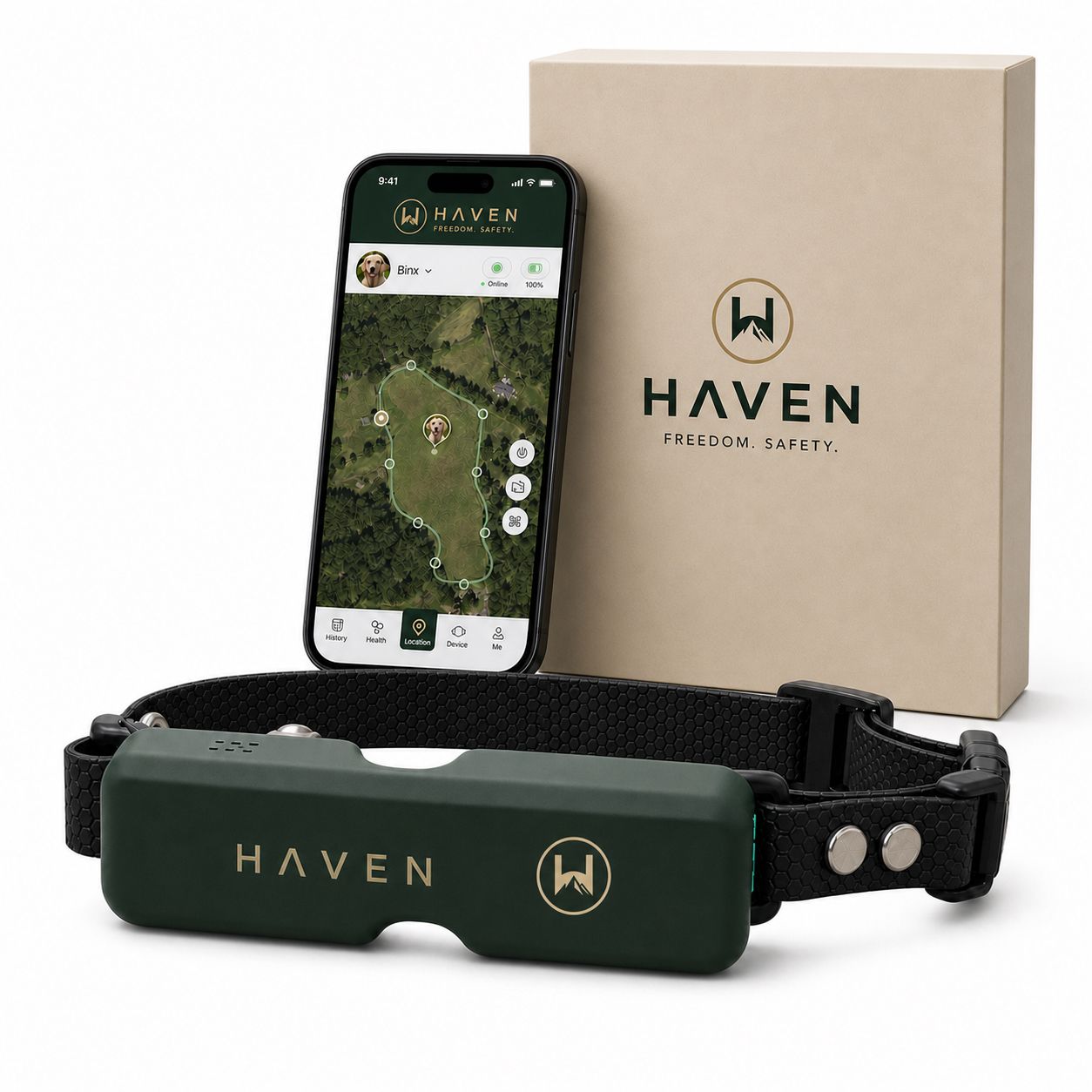
- GPS collar systems, like HAVEN Freedom, use satellite and cellular positioning instead of a buried wire or fixed base station. You draw the boundary in an app, and it travels with you to a new house or a rental.
Compare Factory’s breakdown of indoor spot barriers versus perimeter security highlights the core trade-off: portability and speed of setup versus permanence and coverage area. Every category has technical limits worth knowing before you buy. GPS accuracy can drift several feet near tall trees or buildings. Collar fit matters more than most owners assume. A loose collar delays the alert signal reaching the dog’s skin. Base stations lose range near metal siding or heavy interference sources.
None of this replaces training. A device marks the line. Your dog still has to learn, through repetition and reward, that the line means something.
Setting Up a GPS or Wireless Boundary: A Configuration Checklist
Getting the hardware right before day one saves weeks of troubleshooting later. Run through this list before you ever turn the fence on:
- Fit the collar snugly. Two fingers should fit between the strap and the dog’s neck, no looser.
- Charge fully and check firmware. Update the app and collar firmware before the first walk.
- Choose your mapping method. Drawing the polygon in the app is faster and works well for open yards; walking the actual perimeter with the collar active tends to produce a tighter, more accurate boundary on irregular lots or wooded property.
- Sync training to device cues. Use the same tone or vibration warning during training sessions that the collar uses live, so the sound itself becomes a cue your dog already understands.
- Test at different times of day. Run boundary checks in morning fog, midday sun, and evening dark, since GPS reception and battery drain can vary.
Haven’s own interference guides recommend a two-week testing window before trusting any wireless or GPS boundary unsupervised, checking behavior with realistic distractions like visitors, other dogs, or wildlife present. Stay within arm’s reach for the first several sessions regardless of how confident the setup feels.
Why Do Keep Out Zones Fail, and How Do You Fix Them?
Most failures trace back to one of two causes: inconsistent enforcement or a technical gap nobody checked.
Behavioral causes:
- Rewarding the dog for crossing back “on their own” accidentally reinforces the crossing itself.
- Moving too fast, skipping the distraction stage, sets the dog up to fail in real conditions.
- Different family members enforcing different rules confuses the dog about where the actual line sits.
Technical causes:
- A collar that’s shifted loose delays the correction signal.
- GPS drift near buildings or dense trees can shrink or distort the boundary shape.
- Dead batteries or skipped firmware updates cause silent failures nobody notices until the dog is gone.
Pro Tip: If a dog that’s been reliable for weeks suddenly starts testing the line again, check the hardware before you blame the training. A slipped collar or a firmware update the dog hasn’t adjusted to causes far more “sudden” regressions than actual behavior change.
If regression continues past a week of troubleshooting, add the visual flags back temporarily and consult a certified trainer or your veterinarian, particularly if anxiety or reactivity seems to be driving the escapes rather than simple curiosity.
What Does Haven’s Hands-On Training Guidance Look Like?
Haven’s 14-day wireless fence boundary training plan walks through daily exercises that build from short leashed sessions to full off-leash reliability. The companion two-hour GPS fence setup guide covers mapping, collar fit, and first-day testing. For larger properties, Haven’s farm dog containment guide outlines a hybrid setup pairing perimeter tech with traditional fencing at high-risk edges like roads.
What Owners Get Wrong About Dog Containment
Most people treat containment as a purchase decision. Buy the right fence, the right collar, the right gate, and the problem solves itself. It doesn’t. The research on boundary training keeps returning to the same finding: training failures almost always come from removing visual cues too early or enforcing the rule inconsistently, not from a device malfunctioning.
Here’s what actually separates a boundary that holds from one that doesn’t. Owners who treat the device as a training aid, not a replacement for training, end up with dogs that respect the line even when the collar battery dies. Owners who buy the tech and skip the groundwork end up back at square one the first time a rabbit runs through the yard.
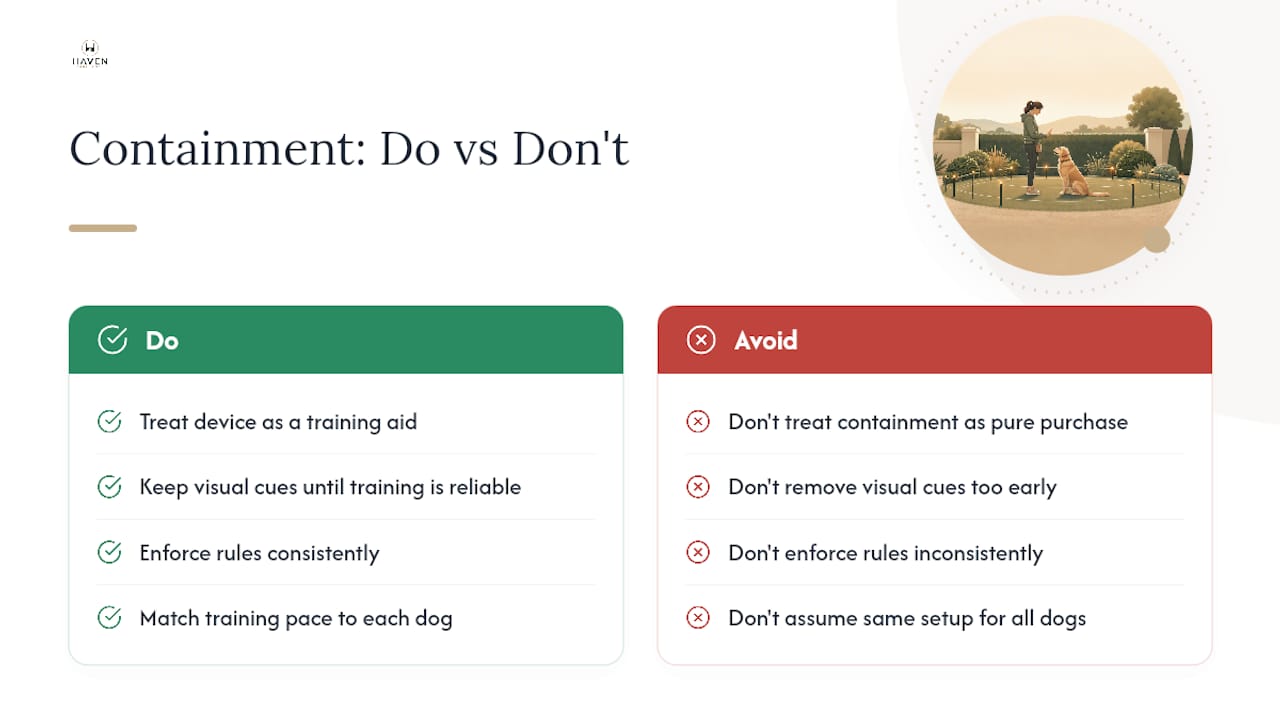
For multi-dog households, don’t assume one boundary setup fits every dog. A younger or more excitable dog needs a longer distraction-staging period than a calm senior. Match the training pace, and the technology, to the individual dog in front of you.
Start with training. Add a device to enforce and extend what the training already built.
— Haven
Get a Wireless Boundary Running Without Digging a Trench
Havenfreedom built the HAVEN Freedom collar for owners who want a real boundary without a weekend spent burying wire. You draw the zone in the app, the fence works with no monthly subscription required, and live 4G tracking, escape alerts, and a sound, light, and Bluetooth radar finder stay available if you want the optional plan later.
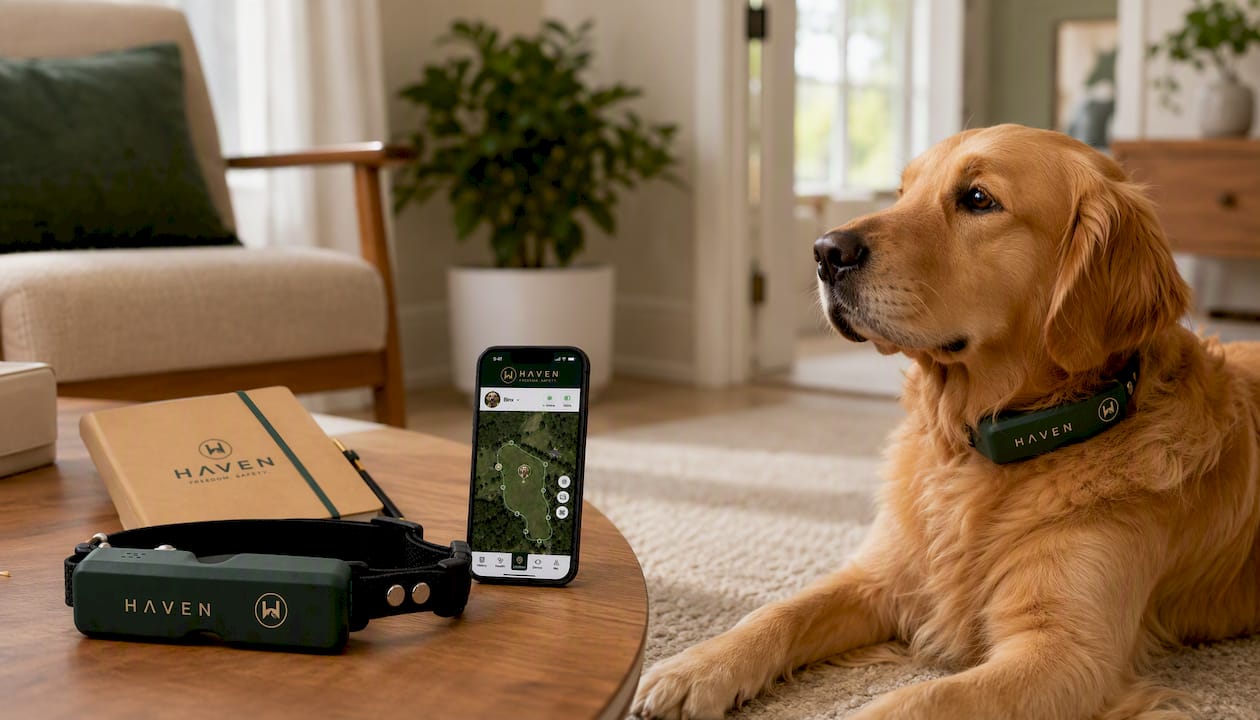
It fits owners who need flexibility more than permanence: renters, families who move, or anyone whose dog explores a yard one month and a campsite the next. Pair it with the training steps above, since a dog that already understands “stay out” adapts to a new boundary within days instead of weeks. If your dog is escape-prone or you’re setting up containment on a property with tricky terrain, check the collar’s product page for sizing and setup details before you order.
Sources
- Teach your dog to keep out: boundary training (AKC)
- Boundary training (Whole Dog Journal)
- How to clicker train your dog to stay in the yard (Karen Pryor Clicker Training)
FAQ
What Is the 7 7 7 Rule for Dogs?
The 7 7 7 rule is a puppy socialization guideline suggesting exposure to multiple surfaces, environments, and new people or experiences by a young age, depending on the version cited. It’s a socialization framework, not a boundary training method, though early exposure does make later training, including boundary work, go faster.
How Do You Block Off Areas for a Dog?
Use a physical barrier like a baby gate, exercise pen, or fencing for any area that needs zero-supervision safety, and combine boundary training with a wireless spot barrier or GPS system like HAVEN Freedom for areas where you want flexibility instead of a hard physical block.
Are Dogs Happier Indoors or Outdoors?
Most dogs do best with access to both, since they need mental stimulation and social contact that indoor time provides alongside the exercise and sensory enrichment outdoor time offers. A dog kept exclusively outdoors without company is more likely to develop anxiety-driven escape behavior, which makes reliable keep-out training even more important.
Where Do Dogs Not Like to Be Touched?
Most dogs dislike being touched on the paws, tail, ears, and muzzle, and reading that discomfort matters when handling a dog during boundary or fit checks on a collar. Grooming and handling reactive dogs calmly, as covered in this guide to grooming reactive dogs, applies the same patience principles used in boundary training.
Can a GPS Collar Replace Boundary Training Entirely?
No. A GPS collar like HAVEN Freedom enforces a line, but the dog still needs to learn what that line means through reward-based repetition, exactly as outlined in the step-by-step training guide above. Skipping training and relying on the device alone raises the risk of a high-distraction escape.
Recommended
Keep reading
e collar humane
Humane E Collar Training: 7 Steps, Starting With a Vet Check
See how humane e collar training starts with a vet check, conditions tone and vibration, uses rewards, and reserves static stimulation as a last...
Read the postcoyote safety for dogs
Protect Your Dog from Coyotes in 14 Days with a GPS Boundary
Keep your dog safe from coyotes with immediate steps, yard fixes, hazing, and a 14 day GPS boundary plan you can start today.
Read the postYour adventure starts here
Ready to give your dog more room to roam?
Give your dog more freedom to explore — and give yourself the reassurance of knowing they're never far away.
