

If your GPS fence collar battery fails, do these three things now: swap to a charged unit or power-cycle the collar, disable live-tracking and stretch the update interval, and move your dog to a leash or a fenced yard until the collar is back online. Most failures trace back to update frequency, weak signal, water exposure, or battery wear with age. Once your dog is secure, work through the maintenance checklist below so this doesn’t happen again next week.
TL;DR:
- Using a non-approved charger or faulty cables is a common cause of GPS collar battery failures and should be checked first during troubleshooting.
- Frequent location updates and poor signal strength significantly increase power consumption, shortening battery life and raising the risk of early failure.
- Proper routine maintenance, such as charging before the battery drops below 20% and inspecting seals monthly, can greatly extend battery lifespan.
- Water exposure and extreme temperatures accelerate battery degradation, making environmental protection and careful handling essential.
- In case of a battery failure outdoors, immediate recall cues, last-known location, and physical containment are critical to recovering the dog quickly.
Table of Contents
- Quick Fixes to Try When a GPS Fence Battery Fails
- Why Do GPS Fence Batteries Fail Early?
- How to Prevent GPS Fence Battery Drain
- What to Do If the Collar Dies While Your Dog Is Outside
- When to Replace vs. Repair a GPS Fence Battery
- What Actually Reduces Battery Risk in a GPS Fence Design
- How Havenfreedom Approaches Battery Reliability
- Sources
- FAQ
Quick Fixes to Try When a GPS Fence Battery Fails
Work through these in order. Most collars recover within the first three or four steps.
- Check the charger and cable. Use the manufacturer-approved charger, and if you have a spare cable, swap it. A cheap third-party cable is a common, overlooked cause of “dead” collars that aren’t actually dead.
- Power-cycle the collar and the app. Turn the collar fully off, wait 15 seconds, and restart it. Close and reopen the app on your phone at the same time.
- Cut live-tracking and lengthen the update interval. Constant location pings are one of the fastest ways to drain a small battery, and dropping to a longer interval buys hours of runtime immediately.
- Grab a spare unit or go physical. If you own a second collar, charge and swap it. If not, leash your dog or use a fenced yard while you troubleshoot.
- Use the dog-finder tools. Sound, light, or Bluetooth locators and the app’s last-known-location marker can help you find your dog even with a fading signal.
- Inspect the collar. Look for cracked housing, moisture inside the charging port, or debris blocking the contacts.
Pro Tip: Keep a second charging cable in your car or bag. A dead collar is rarely a dead battery. Half the time it’s a charger that stopped delivering current.
Why Do GPS Fence Batteries Fail Early?
A GPS fence battery fail usually isn’t random. It’s the predictable result of how the collar is used and where it lives.
- Update frequency and Lost Mode. Frequent polling keeps the GNSS chip and cellular radio active longer, and Lost Mode can push updates every few seconds, turning what should be a week of standby into only a few days of runtime, according to Grepow’s analysis of pet tracker power use.
- Weak signal. When a collar struggles to find a cell tower or satellite fix, it repeats registration attempts and transmits longer, which spikes power draw and can trigger resets during those peak current demands.
- Battery aging and internal resistance. An older battery can show a reasonable charge percentage yet still shut down under a power spike, because its ability to deliver a quick burst of current has degraded, not just its total capacity.
- Water and temperature. Moisture inside the housing and extreme heat or cold both reduce usable battery capacity, even when the cell itself isn’t damaged.
- Charger quality and contact damage. A worn or generic charger, or corroded charging contacts, can cause slow, incomplete charges that look like battery failure.
How to Prevent GPS Fence Battery Drain
Most gps fence power problems come down to habits, not hardware. Build these into a routine and failures become rare instead of routine.
- Use only the approved charger. Keep a backup cable at home and one wherever your dog spends the most time, like a car or a second house.
- Install firmware updates promptly. Manufacturers frequently ship power-optimization fixes in firmware, and skipping updates means missing those gains.
- Inspect seals and contacts monthly. Wipe down the charging port, check for cracked seams, and dry the collar fully after swimming or heavy rain.
- Protect against temperature extremes. Don’t leave the collar in a hot car or store it in a freezing garage; both degrade the battery faster than normal use.
- Rotate spare units for high-use dogs. If your dog wears the collar daily for hours outside, a second unit on rotation prevents the constant deep-discharge cycles that wear batteries down fastest.
Pro Tip: Set a recurring phone reminder to check firmware updates monthly. Most owners only think about it after a failure, when it should be part of a normal charging routine.
What to Do If the Collar Dies While Your Dog Is Outside
A battery failure in the field is stressful, but a calm, ordered response gets your dog back faster than panic does.
- Call and use recall cues immediately. Walk toward likely spots, use a whistle or a known recall word, and check high ground where you can see farther.
- Pull the last-known location from the app. Search outward from that point in expanding circles rather than one direction.
- Activate the dog-finder tools if the collar still has partial power. Sound and light locators work at close range even when GPS transmission has stopped.
- Switch to physical containment once your dog is found. Leash, crate, or a neighbor’s fenced yard buys you time to charge or replace the collar properly.
- Alert neighbors if the search extends past your property. Extra eyes cover ground faster than one person.
- Reposition if you’re in a weak-signal area. Move toward open sky or higher ground, and call for help if the search stretches on.
- Document and inspect afterward. Note when the failure happened, what the collar was doing (charging, active tracking, idle), and check it for physical damage before charging again.
When to Replace vs. Repair a GPS Fence Battery
Some failures are fixable with a charge and a settings change. Others mean the device itself is done.
- Rapid decline is the clearest warning sign. If a full charge that used to last days now drops to hours, or the collar resets during active transmission, the battery is likely near end-of-life.
- Visible swelling or damage means stop using it immediately. A swollen battery is a safety issue, not a performance one.
- Runtime varies wildly by how you use the collar. Standby-only use can stretch several days per charge, while continuous live tracking can cut that to a range measured in hours, since real-world runtime depends heavily on update interval and network conditions, not the mAh number on the box.
- Sealed units usually mean replacement, not repair. Most consumer collars aren’t designed for battery swaps, so a dead cell often means a new unit.
- A spare collar is often cheaper than downtime. Weigh the real cost of a replacement unit against the risk of an unsupervised dog during the next failure.
What Actually Reduces Battery Risk in a GPS Fence Design
Most battery failures trace back to one thing: the collar constantly checking in with a network it doesn’t need to reach. A design that stores the fence boundary directly on the collar, using dual-band positioning instead of leaning entirely on cellular reconnection, cuts down on the network duty cycle that drives most Lost Mode triggers. Pairing that with solid boundary habits from the wireless fence interference guide and the 14-day boundary training plan does more to prevent emergencies than any single settings tweak.
— Haven
How Havenfreedom Approaches Battery Reliability
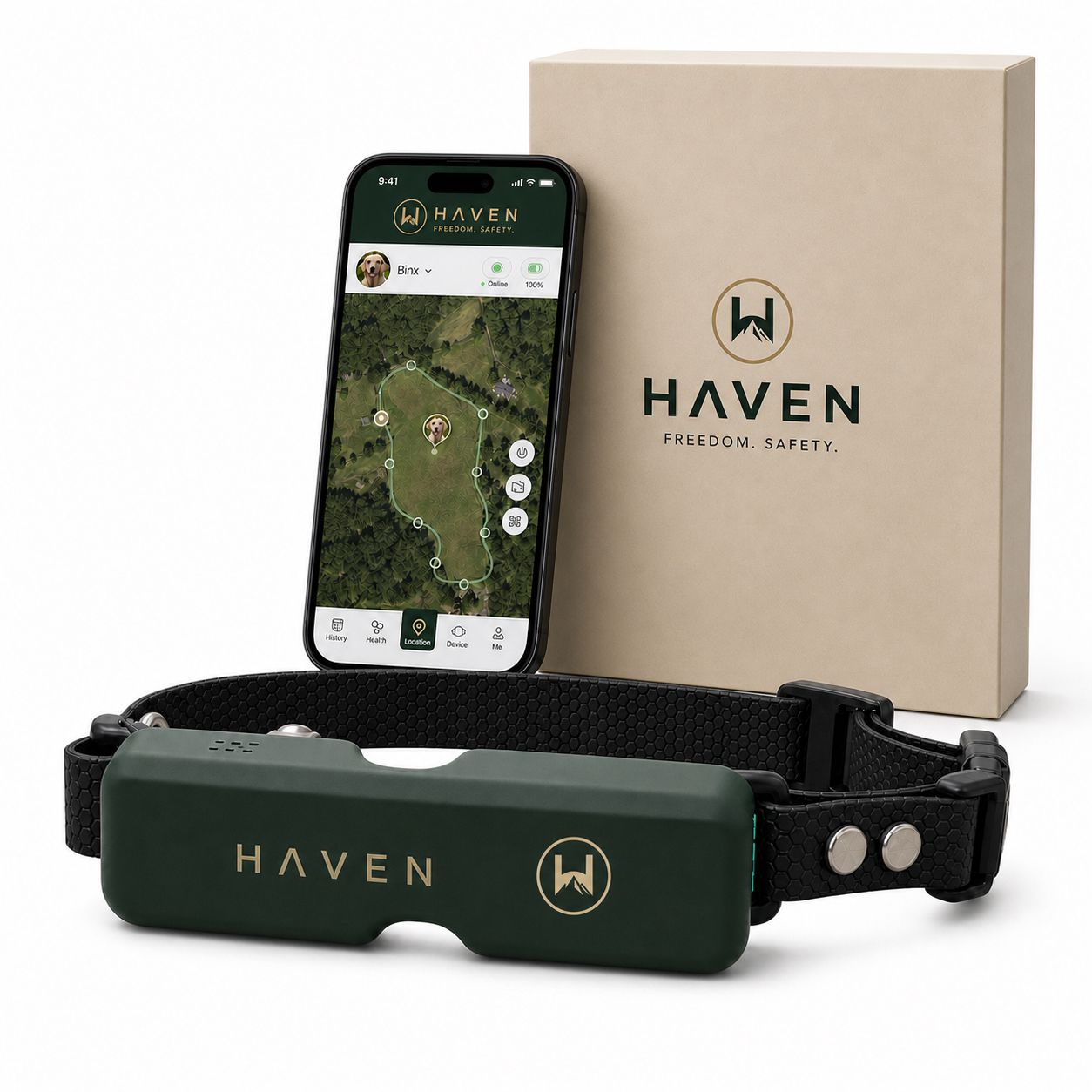
Havenfreedom built the boundary logic directly onto the collar, so containment doesn’t depend on a live network connection working every second. The fence itself runs without a subscription, which means it doesn’t need constant cellular check-ins just to hold a boundary. Dual-band positioning gives it two ways to find a location fix instead of one, reducing the repeated signal searches that drain batteries fastest. A monthly plan is only required if you want live 4G tracking and escape alerts on top of that, and the collar’s sound, light, and Bluetooth dog-finder features work whether or not that plan is active.
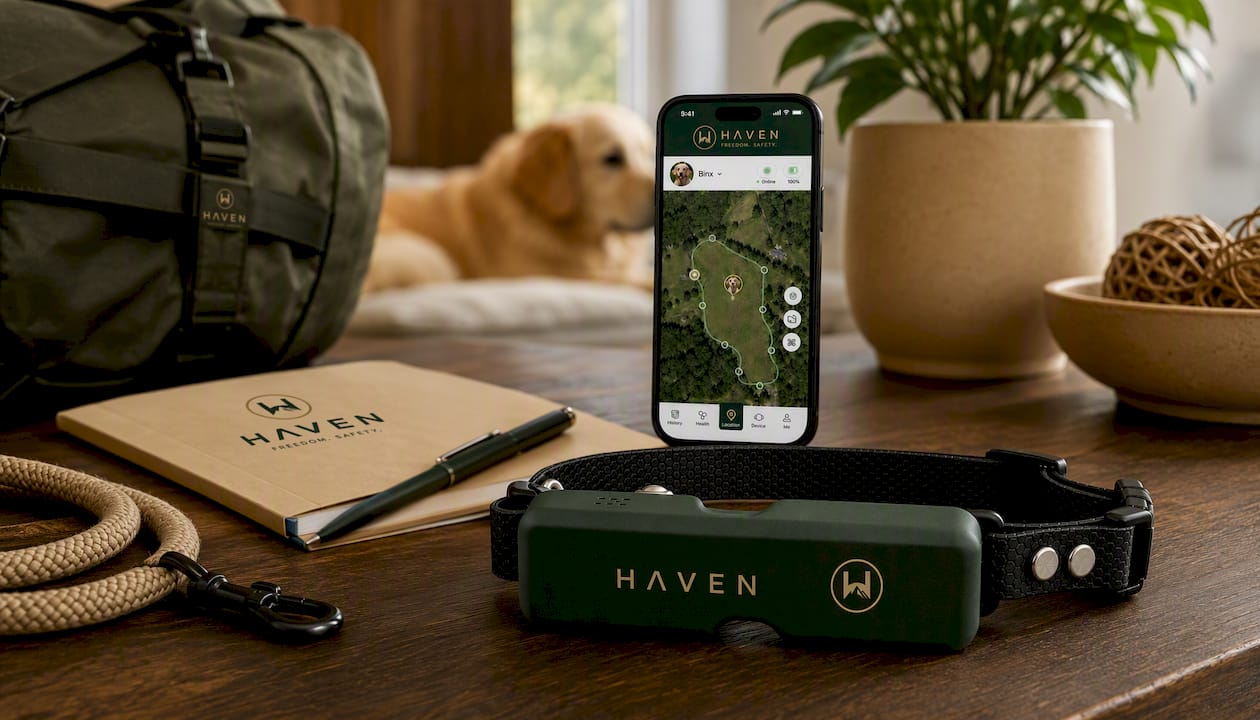
If you’ve been fighting a gps fence battery fail on repeat, start with the GPS Dog Fence Setup guide to configure boundaries and power settings correctly from day one. Pick up a spare collar or charging accessory from the full collection, or check the HAVEN Freedom Wireless GPS Dog Fence and Tracking Collar directly; current pricing details are available on the client’s website. Read the collar’s build details, then decide if a second unit on rotation makes sense for your dog’s routine.
Sources
Technical claims on power draw, charging habits, and real-world runtime come from Grepow’s pet tracker battery research, eviewgps maintenance guidance, and All Ears Pet Care’s runtime comparison. For collar safety and material durability, see this pet owner’s guide to safe collar design.
- Pet GPS Tracker Battery Life & Power Use | Grepow
- Dog GPS Collar Battery Life Comparison (2026) – All Ears Pet Care
FAQ
Why Does My GPS Fence Collar Battery Drain So Fast?
Live tracking, frequent update intervals, and weak signal are the biggest culprits, since all three keep the GNSS and cellular radios active longer than standby mode requires. Lowering your update frequency and turning off live tracking when you don’t need it usually restores most of the lost runtime, according to Grepow’s power-draw analysis.
How Long Should a GPS Fence Collar Battery Last on a Charge?
It depends heavily on settings. Standby use can stretch several days, while continuous live tracking with frequent updates can drop runtime to a matter of hours, based on real-world testing across dog GPS collars.
Does the HAVEN Freedom Collar Require a Subscription for the Fence to Work?
No. The fence function on the HAVEN Freedom Wireless GPS Dog Fence and Tracking Collar runs without a monthly plan since the boundary is stored on the collar itself. A plan is only needed if you want live tracking and escape alerts through the app.
Can Water Exposure Cause a GPS Fence Battery to Fail?
Yes. Moisture inside the housing is one of the more common causes of premature battery failure, and it can degrade a battery even without visible damage. Drying the collar fully and inspecting seals after swimming or heavy rain helps prevent it.
What Should I Do If My Dog Gets Loose During a Battery Failure?
Call and use recall cues right away, pull the last-known location from the app, and search outward in expanding circles from that point. Once your dog is found, switch to a leash or fenced containment while you charge or replace the collar.
Recommended
Keep reading
e collar humane
Humane E Collar Training: 7 Steps, Starting With a Vet Check
See how humane e collar training starts with a vet check, conditions tone and vibration, uses rewards, and reserves static stimulation as a last...
Read the postcoyote safety for dogs
Protect Your Dog from Coyotes in 14 Days with a GPS Boundary
Keep your dog safe from coyotes with immediate steps, yard fixes, hazing, and a 14 day GPS boundary plan you can start today.
Read the postYour adventure starts here
Ready to give your dog more room to roam?
Give your dog more freedom to explore — and give yourself the reassurance of knowing they're never far away.
