

Yes, you can train a reliable recall with a tone, but only if the sound becomes a predictor of reward before you ever ask your dog to move. Skip that step and the tone is just noise. The plan that works follows three rules: condition the sound first, build distance and distraction gradually, and reward every single arrival, no exceptions.
TL;DR:
- Consistent use of a tone that has been conditioned with high-value rewards is essential for reliable recall training.
- Moving gradually from indoor, distraction-free environments to open spaces and adding distractions increases the likelihood of success.
- Rewards must be immediate and only given upon arrival to reinforce the obedient response and prevent dependency on repeated cues.
- Reward-based methods are supported by research as more effective than shock collars, which can slow response and cause welfare concerns.
- Boundary devices like GPS collars should supplement, not replace, foundational recall training to ensure dog safety in real-world scenarios.
Table of Contents
- What Is Recall Training With Tone, and Why Does It Work?
- Which Tools Should You Use for Tone Recall Training?
- How Do You Train a Dog to Come When Called Using Tone?
- What Does the Research Say About Tone and E-Collar Training?
- Why Isn’t My Dog Responding to the Tone Anymore?
- A Publisher’s Take on Tone Training and Safety Tech
- How HAVEN Freedom Fits Into a Tone Training Plan
- Sources
- FAQ
What Is Recall Training With Tone, and Why Does It Work?
A tone, whether it comes from a whistle or an e-collar’s tone button, only means something to a dog after repeated pairing with reinforcement. This is straightforward classical conditioning: the sound predicts food or play, and eventually the sound itself triggers the same excited response as the reward once did. AKC training guidance notes that a whistle’s real advantage isn’t its pitch, it’s consistency. Your voice changes when you’re tired, annoyed, or shouting across a field. A whistle or tone button sounds identical every time, at any distance, in any weather.
That consistency matters most when your dog is 80 yards away and can’t read your body language.
Tone signals also carry farther than the human voice and cut through wind, traffic noise, and other dogs barking. There’s a behavioral upside too: a calm, neutral tone doesn’t spike a handler’s frustration the way yelling does, and VCA behavior guidance points out that repeated loud commands can actually increase a dog’s arousal instead of settling it.
The catch is that none of this works automatically. A few things undercut the whole approach:
- An unconditioned tone (never paired with reward) means nothing and will be ignored.
- Inconsistent use, sometimes rewarding, sometimes not, weakens the association over time.
- Introducing the tone during high distraction before it’s built up any reward history sets the dog up to fail.
Which Tools Should You Use for Tone Recall Training?
Picking the right hardware matters less than using it consistently, but some choices make the job easier.
Whistles come in a few flavors. A single-tone whistle is the simplest and most common choice for recall because it gives one unmistakable signal. Two-tone whistles let you assign separate sounds to separate commands (recall versus “sit,” for example). Ultrasonic whistles sit outside typical human hearing range and can be useful in noise-sensitive households, though they offer no real training advantage over an audible tone.
E-collar tone buttons work the same way a whistle does: sound first, then reward, until the tone alone gets a response. The mistake most owners make is treating the tone button as a warning shot before static correction. Used that way, it becomes a predictor of something unpleasant, not something rewarding, which defeats the entire point of tone conditioning.
Long lines (15 to 30 feet) and a well-fitted harness let you practice real distance without risking a bolt. A front-clip harness gives you more control during the early distraction phase than a collar alone.
When shopping for tools, prioritize:
- A tone that stays exactly the same every time it’s triggered
- Reliable activation with no lag between button press and sound
- Easy one-handed operation so you can reward quickly with the other hand
How Do You Train a Dog to Come When Called Using Tone?
Recall training with tone breaks down into four phases, and rushing any one of them is the single most common reason dogs “forget” their training later. AKC’s recall guidance frames this correctly: coming to you has to be the single most rewarding thing that happens to your dog all day.
1. Condition the tone (indoors, zero distractions). Blow the whistle or press the tone button, then immediately deliver a high-value treat, five to ten times per short session. You’re not asking for anything yet. You’re just building an association: sound equals good thing. Repeat this over two or three days before moving on.
2. Add movement. Once the tone reliably perks your dog’s ears up, sound it while your dog is nearby and reward the approach, even a single step toward you. Layer in a verbal cue like “come” alongside the tone for a few sessions, then start phasing out the word so the tone carries the weight on its own.
3. Build distance with a long line. Move to a yard or open space and clip on the long line. Call once. Wait. When your dog arrives, reward generously, add a gentle collar touch (this prevents dogs from learning to dodge a hand reaching for their collar later), then either release them back to play or ask for a quick sit. Never call twice in a row, that habit trains dogs to ignore the first cue.
4. Add distraction and context. This is where most training plans fall apart because owners move too fast. Practice in a fenced area before ever trying off-leash in an open field. Add one distraction at a time, another dog at a distance, a dropped toy, a jogger passing, and only raise the difficulty after several clean successes in a row.
Keep sessions short, five to ten minutes, and always end on a win. Rotate rewards (treats, tug, a quick game of chase) to keep the payoff unpredictable and exciting.
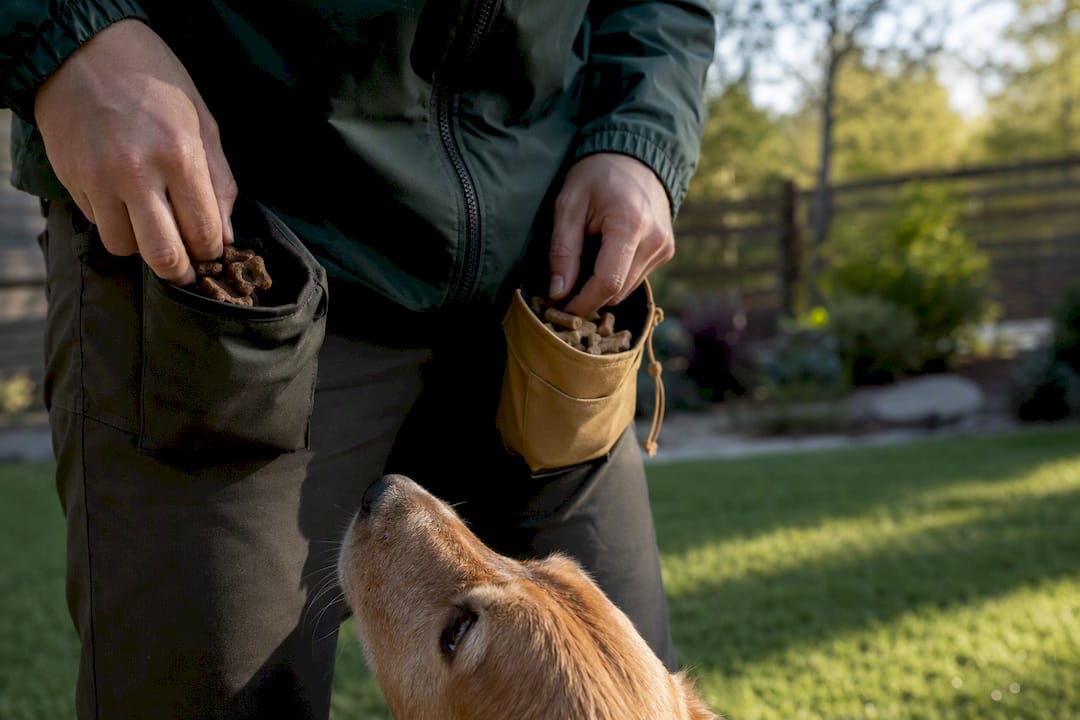
Pro Tip: Carry two treat types in different pockets. Save the highest-value one, think real chicken or cheese, exclusively for recall. If your dog gets it for anything else, recall stops being special.
What Does the Research Say About Tone and E-Collar Training?
The strongest available evidence doesn’t favor e-collars over reward-based methods, and in some measures it favors the opposite. A 2020 Frontiers study tracking a group of dogs split into three training groups found that dogs trained with reward-based methods responded faster after a single instruction and needed fewer repeated commands than dogs trained with remote electronic collars. There was no meaningful difference between groups in how often dogs simply disobeyed.
Professional organizations have taken a clear position on this. The AVSAB’s humane-training statement, reaffirmed in December 2024, recommends reward-based methods and specifically advises against aversive techniques, including shock. The IAABC’s standards of practice, updated with a shock-collar addendum in February 2025, go further, opposing the intentional use of pain, fear, or intimidation in training.
That said, the picture isn’t entirely one-sided. Research from Johnson and Wynne (2024) found that shock-based methods stopped specific unwanted behaviors, like chasing a lure, faster in certain contexts. The authors caution against generalizing that finding to routine recall training, and long-term welfare effects remain a real concern.
The practical takeaway: if your device offers tone or vibration modes, use those as your conditioned cue and skip static correction as an escalation step. GPS trackers and containment tools are worth having as a safety net, but they supplement recall training. They don’t replace it.
Why Isn’t My Dog Responding to the Tone Anymore?
Most tone recall failures trace back to one of four fixable mistakes.
- A poisoned cue. If the tone has ever preceded something unpleasant, a scolding, a bath, the end of playtime, your dog starts avoiding it instead of running toward it. The fix is often a full reset: retire that tone, pick a new one, and rebuild the reward association from scratch.
- Repeating the cue. Calling twice, three times, five times teach dogs that the first (or second, or third) call doesn’t matter. Sound the tone once. If your dog doesn’t respond, close the distance yourself and reset at an easier difficulty next time rather than repeating the sound.
- Reward timing errors. The sequence has to stay fixed: sound, wait, reward only on arrival. Rewarding too early, before your dog fully commits, teaches partial responses.
- Escalating too fast. Jumping from a quiet yard straight to an off-leash trail with squirrels is the single fastest way to burn a cue’s value. Step back down to a long line and lower distraction, then rebuild.
Pro Tip: If your dog seems to “forget” the tone in a new environment, that’s not regression, it’s a fresh context the dog hasn’t generalized to yet. Treat it like day one there and rebuild quickly; it goes faster the second time.
If you’ve tried resetting the cue and rebuilding reward history and your dog still isn’t progressing, that’s the point to bring in a qualified reward-based trainer rather than troubleshoot alone.
A Publisher’s Take on Tone Training and Safety Tech
Tone conditioning and boundary tech solve different problems, and treating them as interchangeable is where owners get into trouble. A dog that reliably comes to a tone is safer everywhere; a dog that only respects a wireless boundary is safer only inside it. The right order is to build the recall first, then layer on GPS boundary training as backup, not the other way around. Devices are a safety net for the moments training hasn’t covered yet, never a substitute for the conditioning itself.
— Haven
How HAVEN Freedom Fits Into a Tone Training Plan
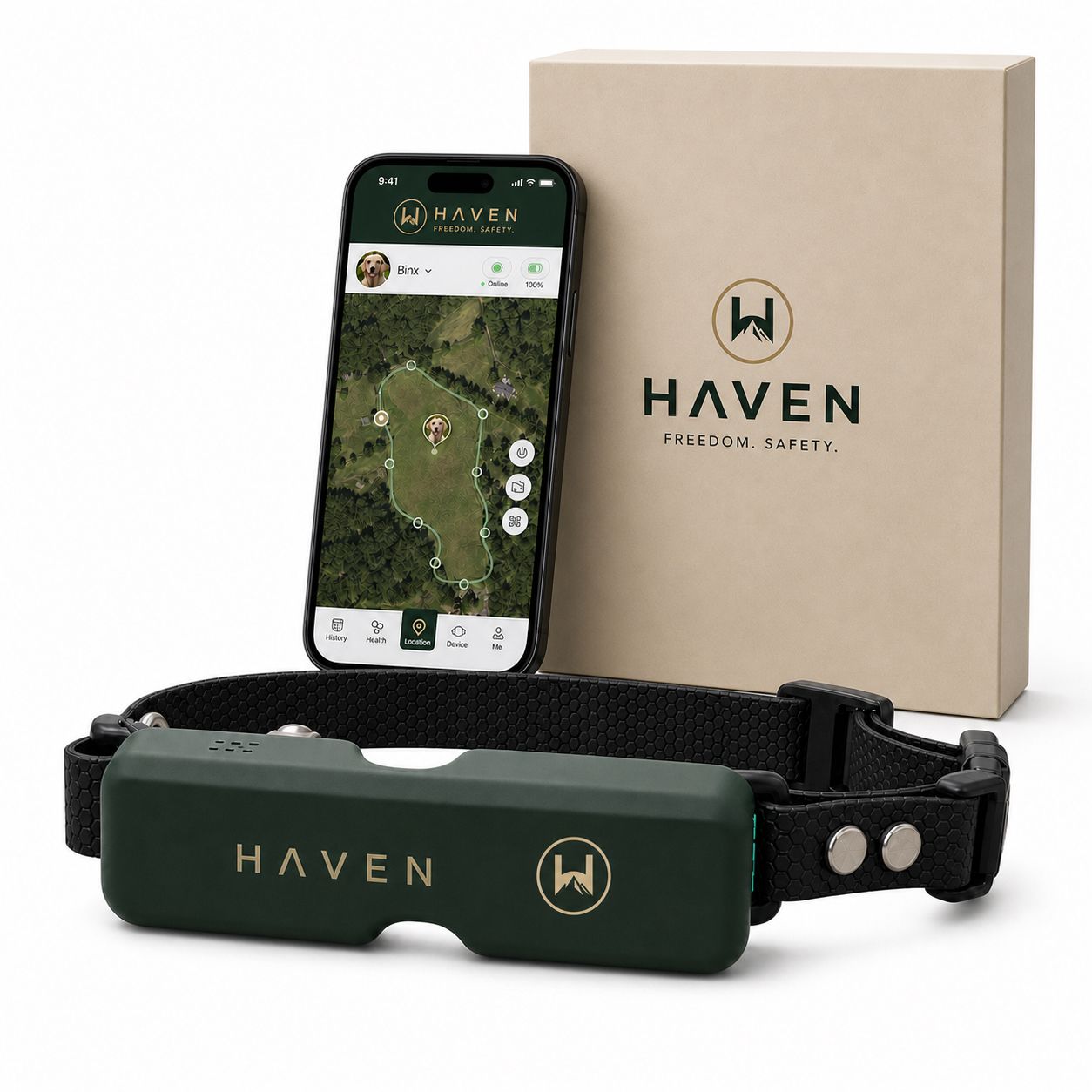
You’ve built the tone, you’ve built the reward history, now you need a way to back that training up when real-world distractions win anyway. The HAVEN Freedom Wireless GPS Dog Fence and Tracking Collar is built for exactly that gap: a collar with an adjustable tone setting you can use as your conditioned recall cue, plus live tracking, escape alerts, and a sound, light, and Bluetooth dog finder for the moments recall doesn’t hold.
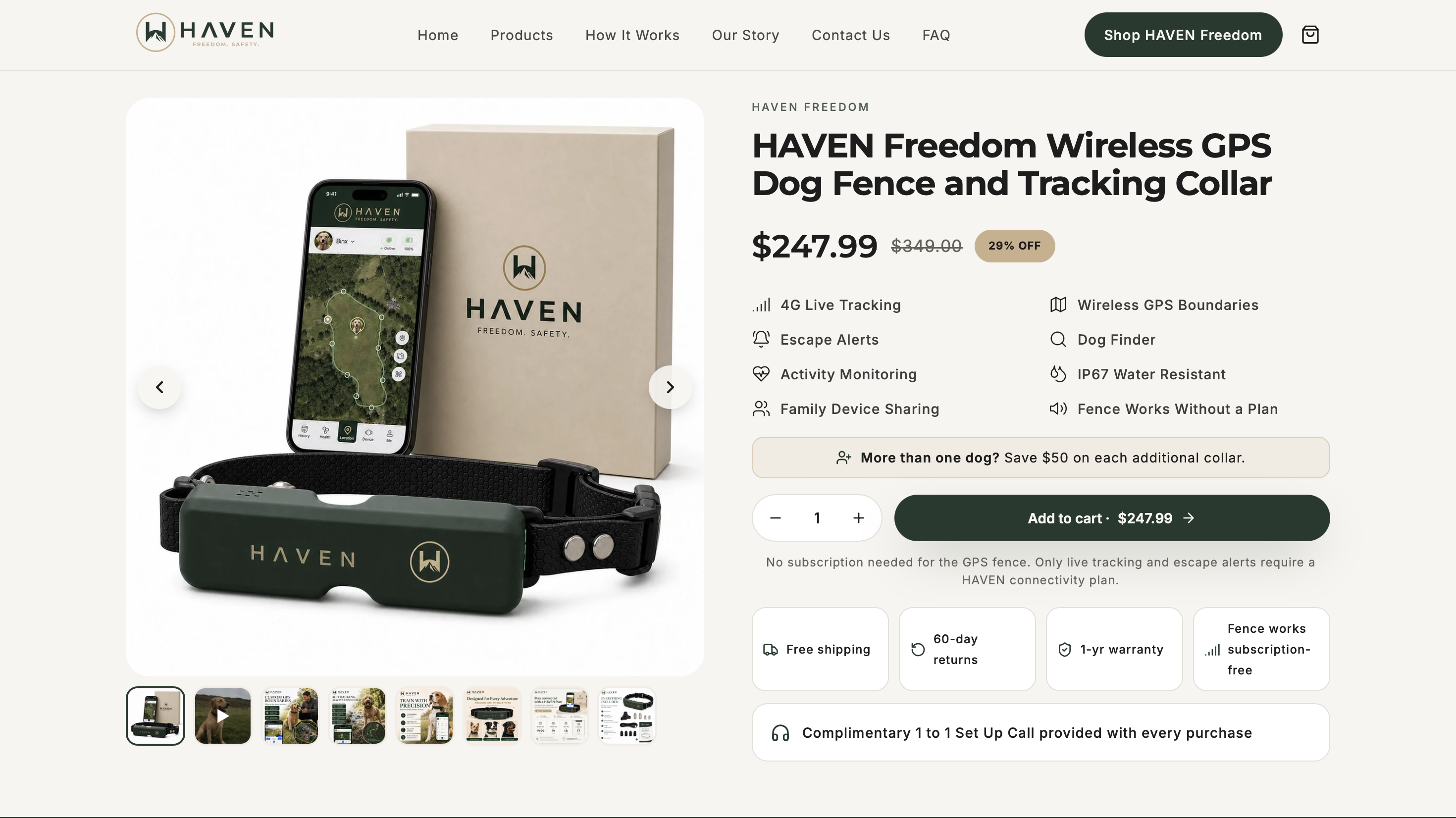
The wireless boundary works without buried wires and doesn’t require a subscription to function; a plan is only needed for certain live tracking and app-based alert features. That makes it a practical layer under your training, not a replacement for it. If your dog ever tests the edge of a new environment before the recall is fully generalized, you’ll get an alert instead of a search party.
Browse the full HAVEN Freedom collection to see which setup fits your yard, your routine, and how you train.
Sources
Claims in this guide draw on the Frontiers 2020 e-collar study, the AVSAB humane-training statement, IAABC’s 2025 standards, and practical guidance from AKC and VCA. For reward selection, see this guide to training treats.
- Efficacy of dog training with and without remote electronic collars vs a focus on positive reinforcement (Frontiers 2020)
- AVSAB humane-training position statement (reaffirmed Dec 9, 2024)
- Dog whistles for training (AKC, 2026)
- Using reinforcement and rewards to train your pet (VCA)
FAQ
How Do You Practice Recall Training Effectively?
Start indoors with zero distractions, pairing the tone with a high-value reward until the sound alone gets your dog’s attention. Then build distance gradually using a long line before ever trying off-leash, and reward every single arrival without exception.
What Is the Hardest Command to Teach a Dog?
Recall is widely considered the hardest command to make truly reliable because it has to compete with real-world distractions like other animals, food smells, and moving traffic. Most failures come from rushing the distraction phase before the cue has enough reward history behind it.
What Is the 3-3-3 Rule for Dog Training?
The 3-3-3 rule is a general guideline some trainers use for newly adopted dogs: roughly 3 days to decompress, 3 weeks to learn routines, and 3 months to feel fully settled. It’s not a recall-specific framework, but it explains why rushing recall training in a dog’s first weeks in a new home often backfires.
Do Dog Whistles Work for Recall?
Yes, whistles work well for recall because they produce the exact same sound every time, which makes them easier to condition than a human voice. Their advantage comes from consistency at distance, not from pitch or any special property of the sound itself.
Can a GPS Collar Replace Recall Training?
No, a GPS collar like the HAVEN Freedom supplements recall training with boundary alerts and tracking, but it doesn’t teach your dog to come when called. Tone conditioning still has to happen first; the device is there for the moments training hasn’t fully covered yet.
Recommended
Keep reading
e collar humane
Humane E Collar Training: 7 Steps, Starting With a Vet Check
See how humane e collar training starts with a vet check, conditions tone and vibration, uses rewards, and reserves static stimulation as a last...
Read the postcoyote safety for dogs
Protect Your Dog from Coyotes in 14 Days with a GPS Boundary
Keep your dog safe from coyotes with immediate steps, yard fixes, hazing, and a 14 day GPS boundary plan you can start today.
Read the postYour adventure starts here
Ready to give your dog more room to roam?
Give your dog more freedom to explore — and give yourself the reassurance of knowing they're never far away.
