

Yes, operating temperature matters for both your collar’s electronics and your dog’s skin, and the fix is simple: know your device’s rated range, pull it off if conditions get extreme, and reposition it often during long outings. Cold saps battery life fast. Heat stresses the cells and irritates skin under the strap. Check the manufacturer’s spec sheet before you head out, not after something fails.
TL;DR:
- Most collars have an operational range of approximately -22°F to 115°F, but actual performance can decline significantly outside these limits, especially in extreme cold or heat.
- Cold weather causes battery capacity to drop temporarily, with a 15% loss near -10°C and up to 35% near -20°C, though this generally reverses when warmed.
- Repeated temperature swings or prolonged exposure to heat can accelerate long-term battery aging and damage the collar’s internal components.
- Regular inspection of the collar’s contact points and repositioning during long outings helps prevent skin irritation and bacterial buildup in harsh weather conditions.
- Consumers should verify detailed thermal and battery specifications, including battery chemistry and warranty coverage, before choosing or using a collar in extreme temperatures.
Table of Contents
- What operating temperature ranges manufacturers quote and what they mean
- How temperature affects batteries and electronics in collars
- Wearer safety: collar contact points, skin risk, and safe-wear practices
- How to choose or verify a collar’s temperature suitability
- Balancing freedom and thermal safety
- Where HAVEN Freedom fits into your outdoor safety checklist
- Sources
- FAQ
What operating temperature ranges manufacturers quote and what they mean
Most GPS and training collars publish two different numbers, and mixing them up causes real confusion. One smart collar listing shows a published range of -22°F to 115°F, which sounds impressively wide until you realize that’s the survival range, not the range where the device performs at its best.
Operating temperature is the window where the collar functions normally: GPS locks, alerts fire, battery drains at a predictable rate. Storage temperature, quoted separately on most spec sheets, is usually narrower because a battery sitting unused reacts differently to heat and cold than one actively powering a radio and sensor array. Leave a collar in a hot truck cab over a 100°F range and you’re testing storage limits, not operating ones.
Here’s how that plays out in real conditions:
- Winter walk, 20°F to 35°F: Most collars stay within range, but expect shorter run-time between charges and slower GPS fix times.
- High-summer hike, 90°F and up: Electronics run hotter than ambient because of direct sun on a dark collar body, so actual internal temperature can exceed the air temperature.
- Wet, near-freezing conditions: The combination stresses seals and can accelerate battery capacity loss even inside the rated range.
- Rapid indoor-to-outdoor swings: A collar going from a warm mudroom to a 10°F yard repeatedly sees more stress than one held at a steady cold temperature.
Check both numbers before buying, and treat the operating range as the one that governs everyday use.
How temperature affects batteries and electronics in collars
Cold is the bigger daily threat to collar batteries. Controlled testing on lithium iron phosphate cells, the chemistry common in rugged pet electronics, found capacity dropped roughly 15% near −10°C and about 35% near −20°C compared to room temperature, according to a 2025 experimental study on LiFePO4 battery performance. That’s a real difference between a collar lasting a full weekend trip and dying mid hike.
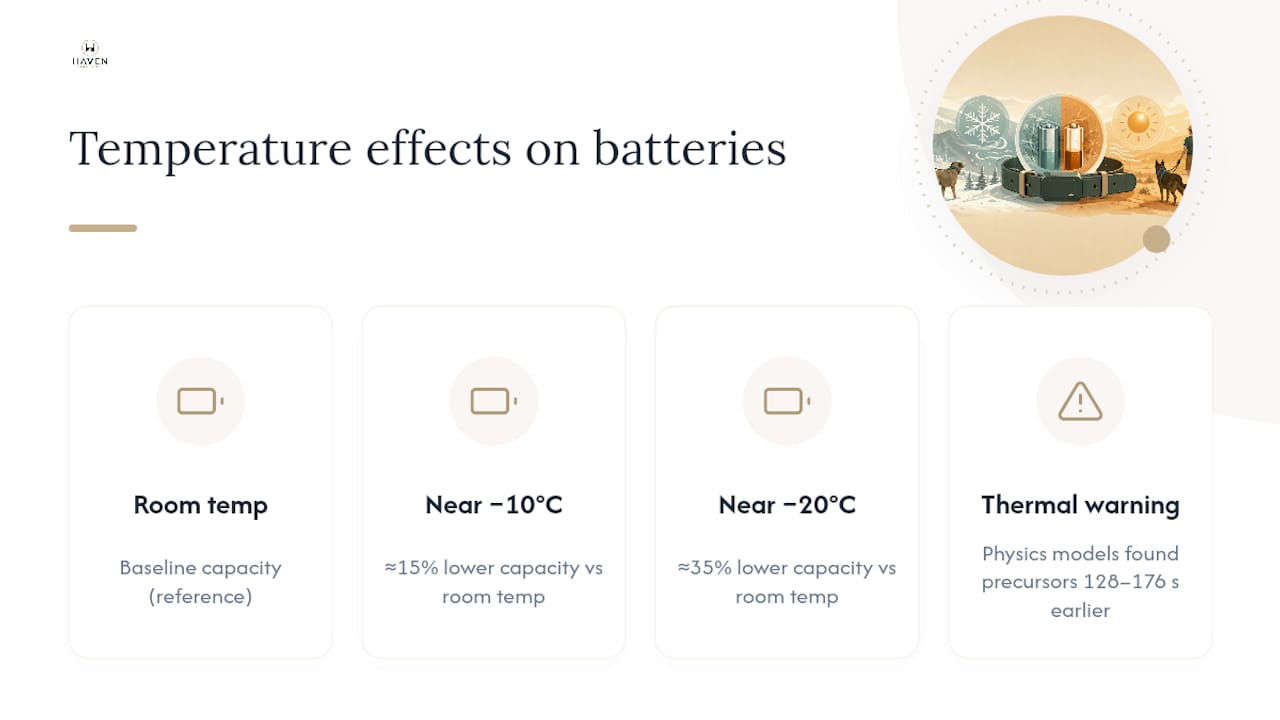
The good news: most of that loss reverses once the battery warms back up. The bad news is on the heat side. Thin polymer lithium-ion cells, the kind packed into slim wearable housings, build internal stress under sustained high heat, and that stress can lead to swelling or, in worst cases, thermal runaway. Engineering research on thermal-runaway early-warning systems for wearable pet devices found that physics-based detection models caught precursor signs 128 to 176 seconds earlier than simple single-threshold temperature cutoffs, a meaningful head start for a device strapped to a moving animal.
The pattern to remember: cold-related capacity loss is usually temporary. Heat-related cell stress is cumulative. A collar that goes from a hot car seat to an icy creek and back, over and over across a season, ages faster than one kept in a stable range. Repeated swings, not a single bad day, do the long-term damage.
Wearer safety: collar contact points, skin risk, and safe-wear practices
Temperature problems don’t stop at the battery. The strap itself creates friction, pressure, and moisture buildup against your dog’s neck, and both heat and cold change how that plays out. A peer-reviewed welfare study examining e-collar training found that even with best practices, contact-point issues and behavioral stress signs didn’t fully disappear, which is a strong argument for treating daily inspection as non-negotiable rather than optional.
Run this routine before and after outdoor sessions:
- Before you head out: check that the strap sits two fingers loose, not tight against the skin.
- During long sessions: shift the collar’s position slightly every hour or two to avoid a single pressure point.
- After every outing: run your fingers under the strap, feeling for heat, dampness, or matted fur.
- Weekly: look for redness, sores, hair loss, or a slick, oily residue that signals bacterial buildup.
- In wet or freezing weather: dry the contact area fully before crating or kenneling the dog, since damp fur against a cold buckle can lead to localized skin irritation.
Wet-and-cold combinations raise the risk of material sticking to skin in freezing temperatures. Hot-and-sunny conditions raise the risk of bacterial growth under a strap that never fully dries. Neither situation is dangerous on its own for a short walk, but stacking them, day after day, is where problems start.
Pro Tip: Keep a spare, dry collar in your pack on wet cold-weather hikes. Swapping a damp collar for a dry one at the halfway point cuts skin-contact risk more than any single adjustment you can make mid trail.
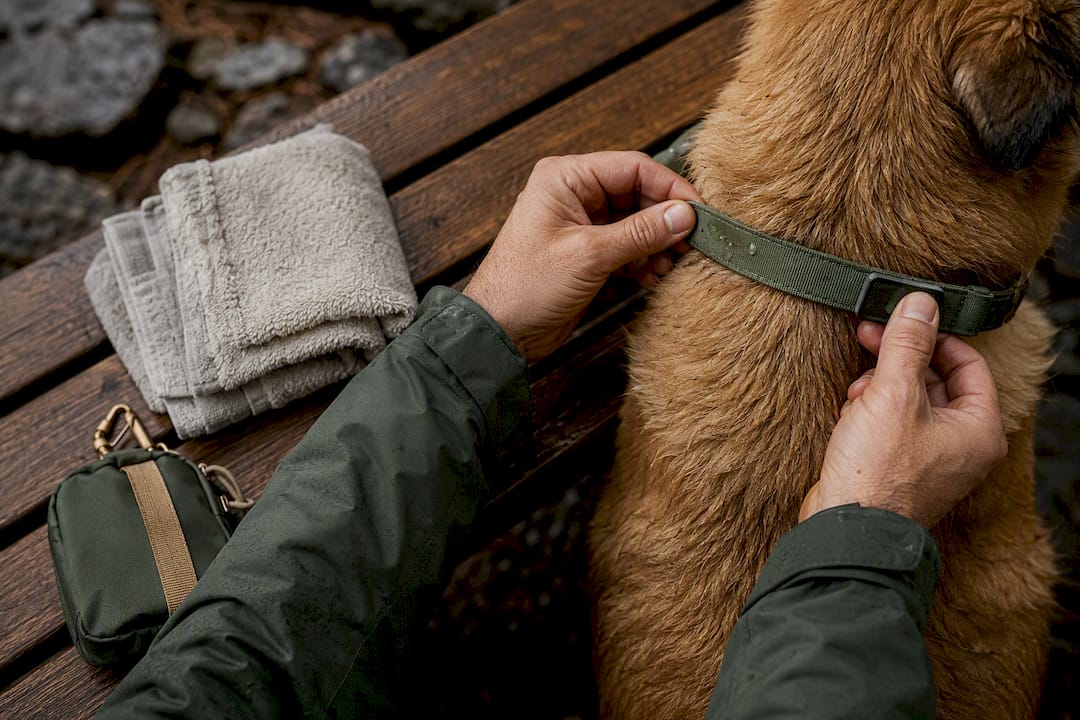
General coat and skin health also plays into how well a dog tolerates a collar in tough weather. Supporting overall skin condition, especially in senior dogs, through products like PetGev’s aging support chews can reduce baseline sensitivity that makes collar friction worse.
How to choose or verify a collar’s temperature suitability
Before you buy, or before your next big trip with a collar you already own, run through this checklist:
- Operating and storage temperature, listed separately. If a product page only gives one number, that’s a red flag.
- Battery chemistry disclosed. LiFePO4 and standard lithium-ion behave differently in cold; vendors who name the chemistry are usually more transparent overall.
- A battery management system (BMS) or thermal protection feature. This is the difference between a collar that shuts down gracefully and one that doesn’t.
- An IP rating for water and dust resistance, since moisture interacts directly with temperature-related failure.
- Published aging or high/low temperature test data. Manufacturers who run aging chambers and thermal cycling tests on their materials and cells are testing for the exact failure modes discussed here.
- Warranty language covering thermal failure specifically, not just general defects.
At home, you can run a rough functional check yourself: charge the collar fully, leave it in an unheated garage or cold porch overnight, then check how much charge it lost by morning compared to a normal indoor night. A steep drop suggests the battery struggles well before it hits its rated minimum. If the app shows battery telemetry, watch drain rate during a genuinely cold outing versus a mild one. When a spec sheet makes bold extreme-range claims with no test data behind them, that’s the moment to contact support directly and ask what testing backs the number.
Balancing freedom and thermal safety
Good containment technology and good thermal habits aren’t separate problems, they’re the same problem viewed from two angles. A dual-band GPS system with customizable, no-buried-wire boundaries only delivers real peace of mind if the hardware underneath also handles heat, cold, and moisture without quietly degrading.
Owners should prioritize collars that publish explicit thermal specs, disclose battery chemistry, and pair escape alerts with a genuine recovery system, sound, light, and Bluetooth radar working together, rather than relying on GPS alone in a dead zone. Design reduces risk. It doesn’t replace the routine checks a dog still needs.
— Haven
Where HAVEN Freedom fits into your outdoor safety checklist
HAVEN Freedom’s approach to boundary safety starts from the same checklist above: no buried wires, wireless boundaries stored right on the collar, and fence functionality that works without a monthly subscription. A plan is only needed if you want live 4G tracking and escape alerts layered on top.
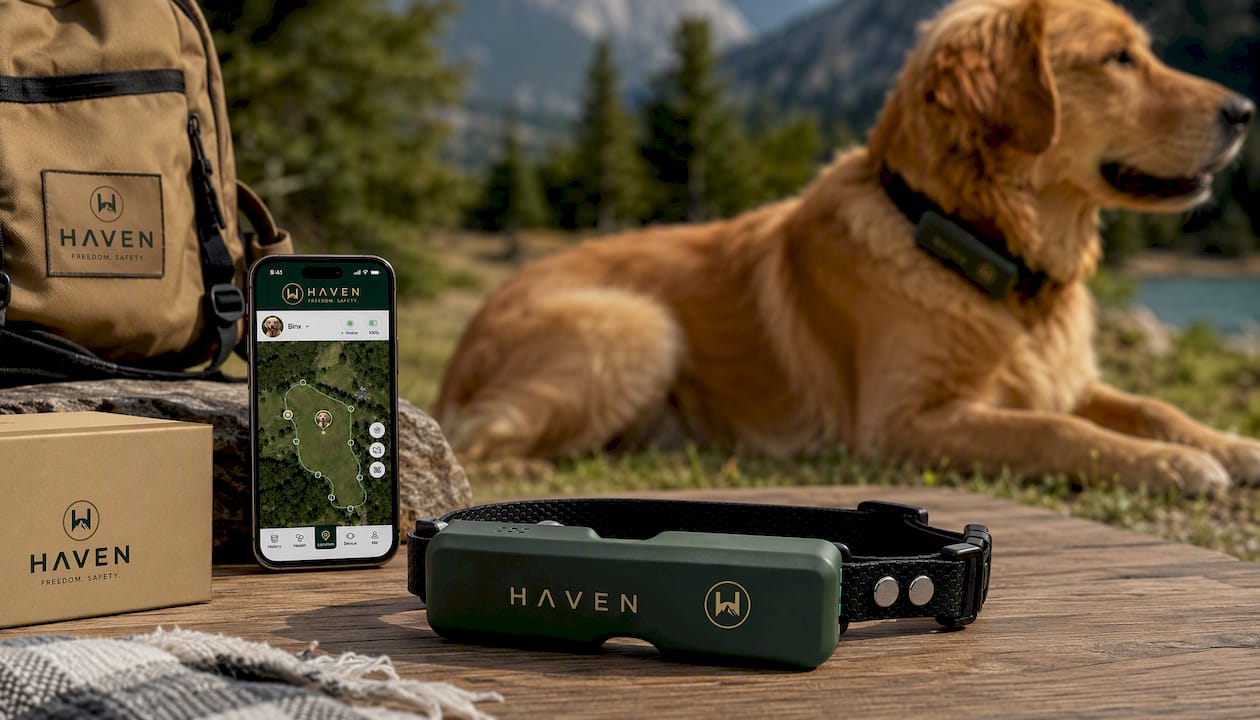
That combination matters most in exactly the conditions this guide covers: a dog off exploring a property line in the summer heat, or bolting during a winter storm when visibility drops. The dog-finder system, sound, light, and Bluetooth radar together, gives you a fast recovery path if a boundary alert fires and your dog wanders before you can reach them. Compare the product’s full specs and warranty terms against the checklist in this guide, or browse the full collection if you’re weighing options for multiple dogs or different terrain. The $349 collar is a one-time purchase, and checking its thermal and battery documentation before your next hot or cold-weather trip takes less time than reading this article twice.
Sources
- The welfare consequences and efficacy of training pet dogs with remote electronic training collars in comparison to reward based training
- Temperature dependence of LiFePO4 battery performance (Batteries 2025 experimental study)
- Design of Thermal Runaway Early Warning and Safety Management System for Polymer Lithium-ion Batteries in Wearable Pet Devices
- Why do battery aging test or high low temperature test on end-product and its material in dog training collar industry
FAQ
What is a safe operating temperature range for a dog collar?
Most GPS and training collars are rated for roughly -22°F to 115°F, though this varies by manufacturer and battery chemistry. Always check the operating range separately from the storage range, since storage limits are usually narrower.
Can cold weather damage my dog’s collar battery?
Cold reduces battery capacity rather than damaging it outright. Testing on LiFePO4 cells found capacity drops of about 15% near −10°C and 35% near −20°C, with most of that loss reversing once the battery warms up.
How often should I check my dog’s collar for skin problems?
Inspect the contact area daily during regular outdoor use, and more often during long hikes or wet, cold conditions. Look for redness, matted fur, or dampness, and reposition the collar every hour or two on extended sessions.
Does HAVEN Freedom’s collar work in extreme heat or cold?
HAVEN Freedom’s wireless boundary system is designed to function without buried wires or a required subscription, with the fence feature working independently of temperature-sensitive tracking plans. Check the current product specs for the exact thermal rating before extreme-weather use.
What should I do if my dog’s collar overheats or stops working outdoors?
Remove the collar immediately, let it cool in shade, and check for swelling or warping in the housing, a sign of internal battery stress. If the device doesn’t recover normally after cooling, contact the manufacturer rather than continuing to use it.
Recommended
Keep reading
e collar humane
Humane E Collar Training: 7 Steps, Starting With a Vet Check
See how humane e collar training starts with a vet check, conditions tone and vibration, uses rewards, and reserves static stimulation as a last...
Read the postcoyote safety for dogs
Protect Your Dog from Coyotes in 14 Days with a GPS Boundary
Keep your dog safe from coyotes with immediate steps, yard fixes, hazing, and a 14 day GPS boundary plan you can start today.
Read the postYour adventure starts here
Ready to give your dog more room to roam?
Give your dog more freedom to explore — and give yourself the reassurance of knowing they're never far away.
